
Component Repairs: Motors, Valves, Coils and Compressors
The expensive parts of an air conditioner fail for reasons Phoenix heat makes predictable. Here is how we diagnose them, and when fixing one still beats replacing the system.
- Numbers before a condemned compressor
- Motors, TXVs, coils, compressors explained
- Honest repair-versus-replace math
- Same-day, flat-rate, quoted before work
Schedule today — we’re here 24/7.
The repairs nobody wants to hear about
Most air conditioner repairs in the Valley are small. A capacitor, a contactor, a drain line packed with haboob dust. This page is about the other kind. Motors, expansion valves, reversing valves, coils and compressors carry real cost, and they are the repairs where a careless recommendation wastes more money than the part itself. A web page cannot diagnose your unit or size its replacement. It can make you a harder person to mislead.What we measure first
A component diagnosis starts before anyone reaches for a part. On a compressor call we read running amps against the nameplate rating, check voltage under load, and take suction and discharge pressures alongside indoor and outdoor temperatures. On a motor call we measure amp draw, bearing play and the capacitor feeding it, because a healthy motor on a weak capacitor looks sick. On a suspected valve or coil problem we take superheat and subcooling and compare them to what the metering device should produce. A charge that is off by a few ounces can mimic a stuck valve. A dirty coil can mimic a failing compressor. If a technician condemns a compressor without showing you numbers, ask for them. If the unit has already quit on a hot afternoon, the compressor failure page covers what to do right now.Common causes, ranked
These are the failure paths behind most major component repairs in Phoenix homes, in order of how often we see them:- Heat and hours. A condenser sits on a gravel pad or a rooftop in 112-degree air and runs most of the day from May to October. Windings and insulation age faster here than the equipment was designed for.
- Restricted airflow. Dirty evaporator coils, collapsed filters and undersized returns drive head pressure up and starve the compressor. Many compressor failures began as a coil nobody cleaned.
- Weak capacitors. A motor forced to start against a marginal capacitor draws high amps every cycle until the windings give out. Cheap part, expensive consequence.
- Refrigerant problems. Low charge from a slow leak overheats the compressor. Overcharge from a careless top-off floods it. Either way the expansion valve gets blamed first.
- Corrosion and contamination. Formicary corrosion in copper coils, acid left from a previous burnout, moisture in the lines. Quiet failures that surface as leaks and stuck valves.
- Electrical supply. Voltage sag during a monsoon outage or a loose lug at the disconnect can end a compressor in one bad start.
Component by component
Condenser fan and blower motors
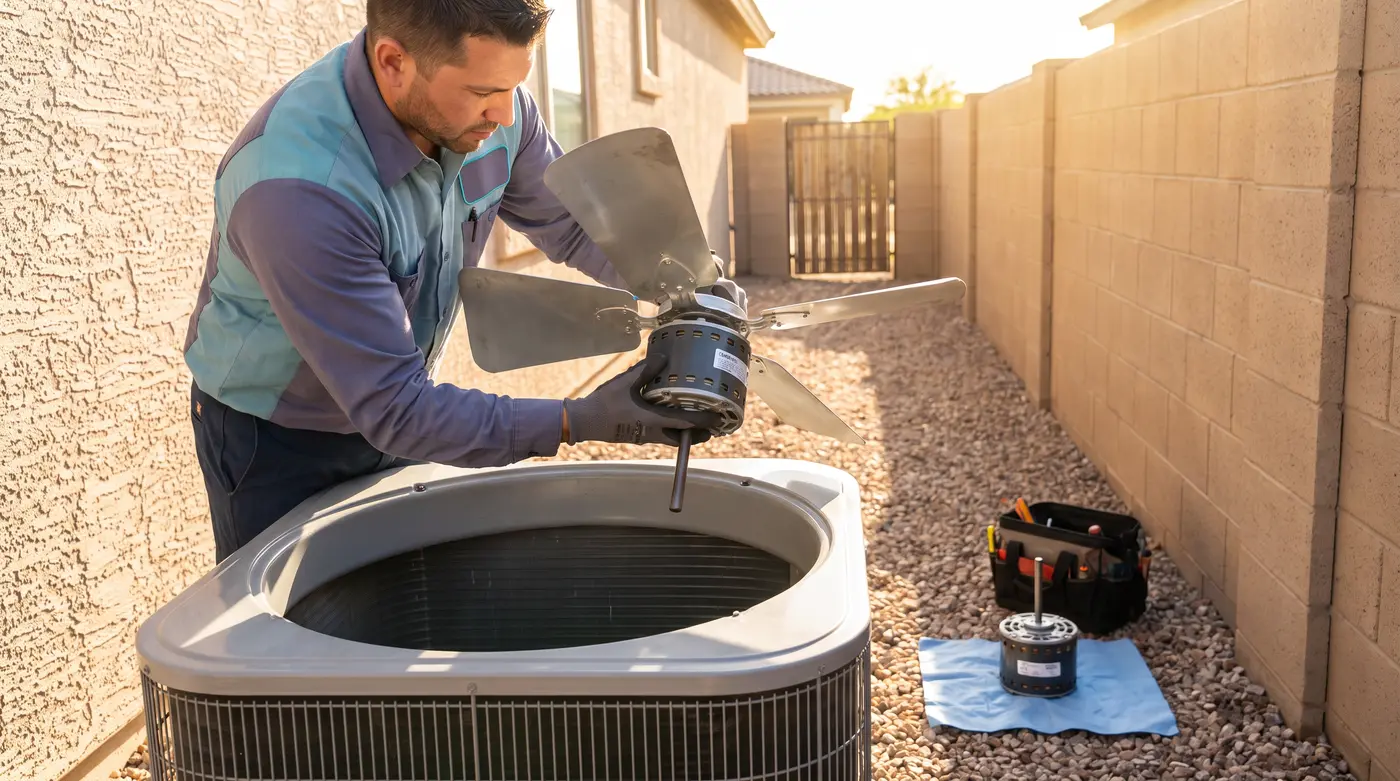
The condenser fan pulls air across the outdoor coil; the blower pushes it through your ducts. Both are commonly worth replacing on an otherwise sound system. Variable-speed blower motors deserve a moment of honesty: they cost more, and they sometimes fail because a restrictive duct system makes them work too hard. Replace the motor without fixing the static pressure and you will meet us again.Expansion valves and reversing valves
A thermostatic expansion valve meters refrigerant into the evaporator. When it sticks, the coil starves or floods and the symptoms look like a leak. A reversing valve lives only in a heat pump and flips the system between heating and cooling; when it sticks partway, you get lukewarm air in both modes. Both repairs open the sealed refrigerant circuit, which means recovery, brazing, a nitrogen pressure test and evacuation. That labor is why a small brass part costs far more installed than it does on a shelf.Evaporator and condenser coils
A leaking coil on a system that runs R-22 or another phased-out refrigerant is often the moment a repair stops making sense. On a newer system a coil replacement can be reasonable, especially when the compressor is young and the rest of the equipment is clean. What we will not do is keep adding refrigerant to a coil we know is leaking and call it a repair.Compressors
The compressor is the most expensive single component in the unit. Replacing one on a young system still covered by a manufacturer parts warranty can be a sound decision. Replacing one on a twelve-year-old unit with a tired condenser coil and mismatched indoor equipment is usually a way to spend serious money on a system that keeps every other old part.When this repair is worth it
A major component repair is worth it when the rest of the system is younger than its expected life, when the failure has a cause you can correct, and when the repair cost stays well below the cost of replacement. It tips the other way when the unit is old enough that the next failure is a matter of when, when the refrigerant is obsolete, or when the system was undersized or badly ducted from the start. The repair-versus-replace guide works through the arithmetic. If the answer leans toward replacement, estimates and financing on approved credit have their own page so you can plan instead of panic. Rooftop package units get a separate conversation, because the whole system is one cabinet and a compressor decision is frequently a whole-unit decision.Before we arrive
There is very little a homeowner should do about a suspected component failure, and that is by design. Confirm the thermostat is set to cool and calling. Look at the filter. If the breaker has tripped, reset it once; if it trips again, leave it off and call. Look for ice on the copper line at the outdoor unit and, if you see it, shut the system off so the coil can thaw. Clear leaves and dust from around the condenser. Do not open the electrical panel or the unit cabinet. Then schedule the evaluation. Once the repair is done, a seasonal maintenance visit is the cheapest insurance the new part will ever get, because most of the failures above started as something small that nobody looked at.Component Repairs: Motors, Valves, Coils and Compressors: common questions
Straight answers, no runaround. Don’t see yours? Our team is a phone call away, around the clock.
An overheated compressor trips on its internal overload and often restarts after it cools, which is why we never condemn one on a first observation in the afternoon sun. We check for grounded, open or shorted windings with the power off, read amps at startup, and rule out the capacitor, contactor and airflow before the word compressor is used. If it truly is failed, you will see the readings that prove it.
It is one of the classic signs, but low refrigerant charge and a failing compressor can produce the same complaint. We confirm a stuck reversing valve by measuring temperatures across the valve body and checking the solenoid before recommending the repair. The heat pump guide explains how the valve fits into the rest of the system.
Because the valve sits inside the sealed refrigerant circuit. Replacing it means recovering the refrigerant, cutting and brazing copper, pressure testing with nitrogen, pulling a deep vacuum and recharging by weight. The part is a small fraction of that visit, and skipping any step invites a second failure.
It depends on the age of the outdoor unit, the refrigerant it uses and whether the indoor and outdoor equipment are matched. A coil on a young system with a current refrigerant is a reasonable repair. A coil on an R-22 system, or on a unit past ten years with other wear, usually pushes the decision toward central AC replacement.
Yes, and it is one of the most common stories behind a major repair. A weak capacitor forces the motor to draw high current on every start, which heats the windings until the insulation breaks down. That is why an annual check of the capacitor is standard on a maintenance visit, and why we test it before blaming the bigger part.
No. The compressor is one component, and the coils, motors, refrigerant lines and ductwork keep whatever age and wear they had before. If the original compressor failed because of a dirty coil, a leak or a duct problem, the replacement inherits the same conditions unless those are corrected at the same visit.
On a system that was designed around one, replacing it with the same type keeps the comfort and efficiency you paid for. What matters more is why it failed, because these motors are sensitive to high static pressure from restrictive ducts and dirty filters. We measure static pressure before installing the new motor and tell you if the ducts are the real problem.
Financing on approved credit is available for both large repairs and replacements, and flat-rate pricing is quoted before any work begins so you can compare the two honestly. The financing page explains the options. We will show you the repair number and the replacement number side by side and let you decide.
Major Component Repair throughout the Phoenix area
Same-day appointments across Maricopa and Pinal counties. Pick your city for local pricing pages, reviews and service details.
Let the numbers decide, not the salesman
Schedule an on-site evaluation. We test the motor, valve, coil or compressor in question, show you the readings, and lay out repair and replacement costs side by side.
- 24/7 emergency service
- Upfront, honest pricing
- Licensed, bonded & insured