
HVAC Airflow Testing
Static pressure, CFM per ton, temperature split, and register velocity measured with instruments. A perfectly charged system can still underperform, and the numbers show why.
- Total external static pressure measured
- CFM per ton verified against design
- Temperature split and register velocity
- Written numbers, not a diagnosis by feel
Schedule today — we’re here 24/7.
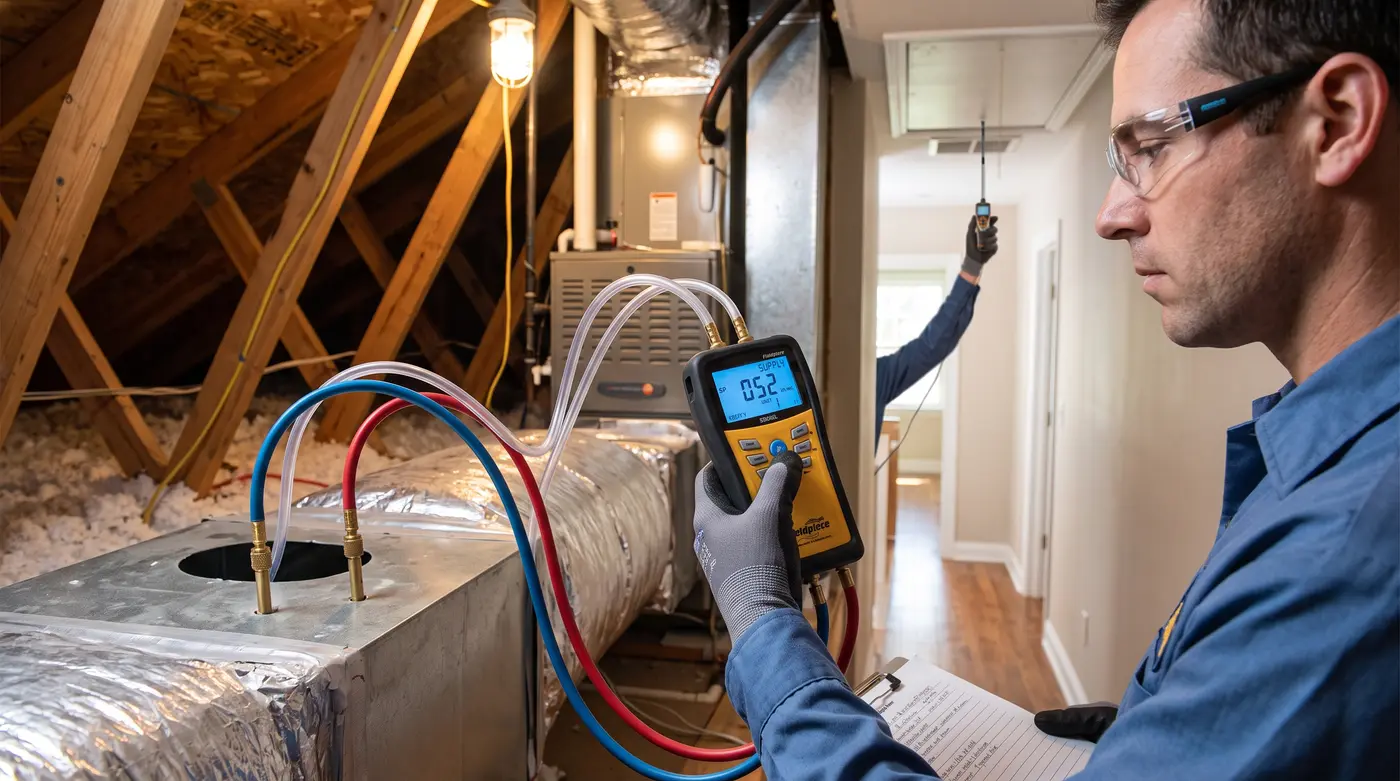
A lot of Phoenix homeowners have been told their system is fine. Refrigerant charge checks out, capacitor is good, coil is clean, and the house is still 82 degrees upstairs at four in the afternoon. That is because charge and airflow are two separate things, and most service calls only check one of them. An air conditioner can be perfectly charged and still deliver two-thirds of its rated capacity if the duct system cannot move the air. Airflow testing is how you find out. It is measurement with instruments, not a technician standing in a hallway with his hand up.
The four numbers we take
Total external static pressure is the big one. We drill test ports and read pressure before and after the air handler with a manometer. Most residential equipment is rated at 0.5 inches of water column, and we want to see under that. Plenty of Valley systems read 0.9 or higher, which is the ductwork equivalent of breathing through a coffee stirrer. CFM per ton should land around 350 to 400 in a dry climate like ours. Below 300 and the coil starts running cold enough to have freezing problems. Temperature split, the difference between return and supply air, should generally sit in the high teens to low twenties on a properly charged system, and a split that reads too wide often means not enough air moving, not a great machine. Register velocity at each outlet tells us where the air is actually landing.What the numbers usually reveal
High static with a clean filter points to undersized returns more often than anything else. Builders in this Valley put a 14-inch return on a four-ton system for decades, and that single choking point costs the homeowner every summer since. Other common findings: flex duct kinked over a truss, a run crushed under blown-in insulation, an undersized trunk feeding a two-story build, or a coil that is restricting more than anybody realized. Low CFM to one bedroom with acceptable numbers everywhere else is usually a balance issue rather than a capacity issue, and air balancing solves that for a fraction of what people expect to spend.Testing also protects you from buying the wrong thing. We regularly test homes where somebody has been quoted a new condenser, and the equipment is fine. The duct system is the bottleneck. Putting a bigger, more efficient unit on a duct system that already cannot breathe gets you a larger power bill and the same hot upstairs. If you have wondered why upstairs is always hotter, the answer is almost always in these numbers, combined with west-facing glass and an attic that hits 155 degrees.
What you get is a written set of readings and a plain explanation of what they mean. If sealing fixes it, we say so and quote duct sealing. If the return is the strangle point, we quote a return air upgrade. If the whole layout was wrong from the day the house was framed, we will show you the case for duct redesign rather than selling you three small jobs that never add up to a fix. And if the readings come back clean, we will tell you that too and point you at the actual cause. Flat-rate pricing before we start, no exceptions. Call (480) 863-5855 or request an estimate.
Why homeowners choose Bleuwave for hvac airflow testing
- Total external static pressure measured
- CFM per ton verified against design
- Temperature split and register velocity
- Written numbers, not a diagnosis by feel
Our simple process
- 1
Book
Call or request service online in under a minute.
- 2
Diagnose
A certified tech inspects and gives upfront pricing.
- 3
Fix it right
We complete the work and back it with a guarantee.
HVAC Airflow Testing: common questions
Straight answers, no runaround. Don’t see yours? Our team is a phone call away, around the clock.
Most residential air handlers and furnaces are rated for 0.5 inches of water column of total external static. Under that is healthy. We routinely measure 0.8 to 1.1 in Phoenix homes, which means the blower is fighting the duct system and delivering far less air than the equipment is capable of. High static shortens blower life, hurts capacity, and shows up on your bill long before it shows up as a breakdown.
Because capacity depends on moving a specific volume of air across the coil. Correct charge with restricted airflow gives you a very cold coil, poor dehumidification during monsoon, low delivered capacity, and sometimes ice. Charge is chemistry and airflow is plumbing, and they fail independently. This is exactly the scenario we cover in one room that never cools.
We think so, and it is cheap insurance. New equipment inherits the old duct system, so if the ducts cannot deliver 350 to 400 CFM per ton today, they will not do it for the new unit either. Testing before an AC installation tells us what the duct system can actually support and whether the replacement should include duct corrections. It is the difference between a system that performs to spec and an expensive disappointment.
This month's specials
Book online to claim. Stack with 0% financing on approved credit.
Keep exploring
Duct repair, sealing, balancing & airflow diagnostics.
Fix leaking, torn or disconnected duct runs fast.
New ductwork when patching no longer pays off.
Comfort now, pay over time.
Save on service and new systems.
Same-day AC & heating service across Phoenix.
Premium HVAC service for Scottsdale homes & businesses.
Fast, reliable heating & cooling in Tempe.
Book hvac airflow testing today
Book online or call now — same-day appointments available across the Valley.
- 24/7 emergency service
- Upfront, honest pricing
- Licensed, bonded & insured