
Duct Insulation
Ducts crossing a 155-degree Phoenix attic lose temperature through thin or failed insulation. We wrap runs and plenums to R-8 and close the vapor barrier behind us.
- R-8 wrap on supply runs and plenums
- Compressed and torn insulation replaced
- Vapor barrier sealed against humidity
- Cooler air at the farthest register
Schedule today — we’re here 24/7.
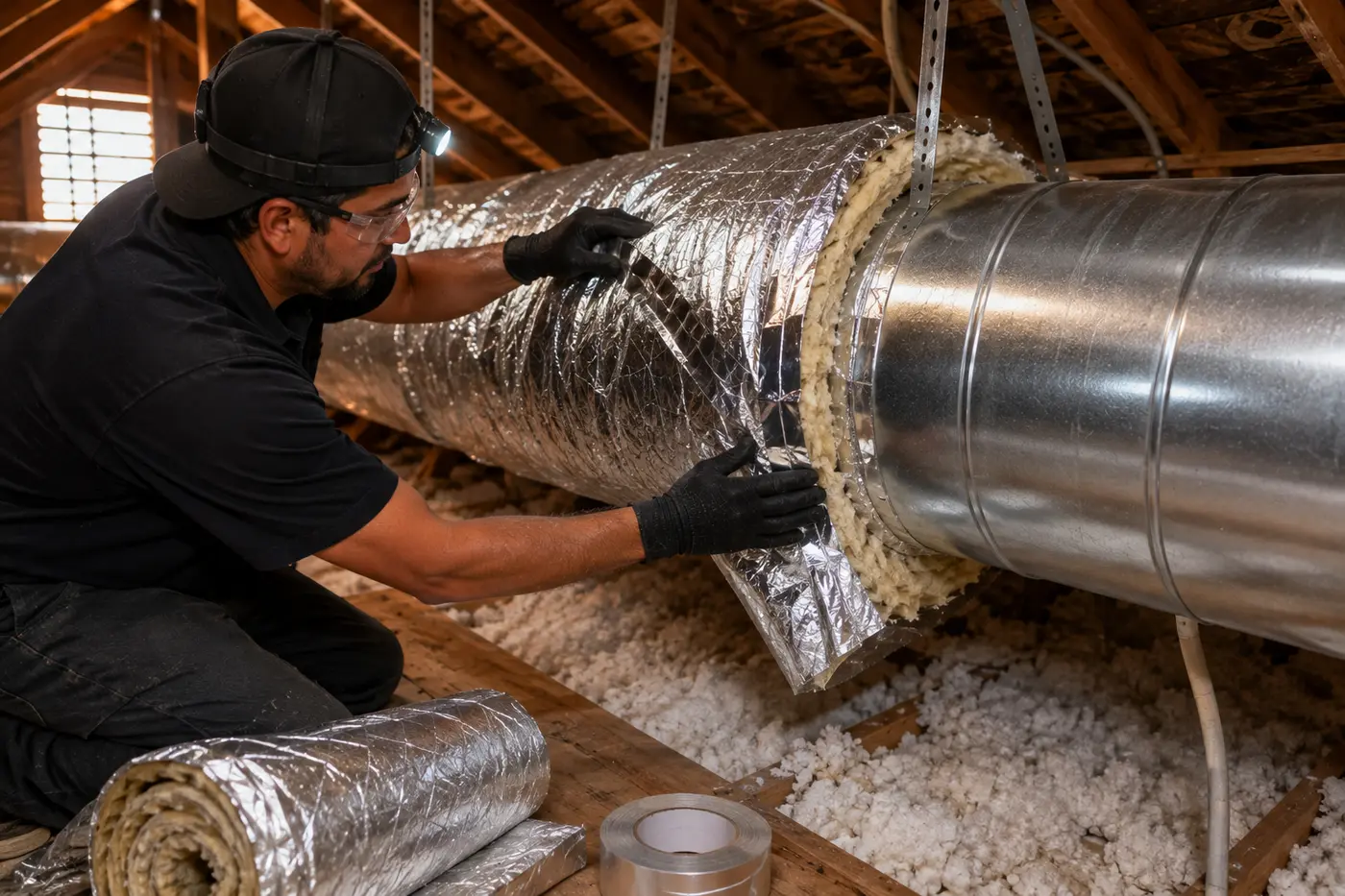
Cooled air leaves your evaporator coil around 55 degrees. Then it travels through a space that is 155 degrees. Every foot of that trip is a heat exchange working against you, and the only thing standing between the two temperatures is the insulation wrapped around the duct. Thin it, compress it, or tear it, and the air arriving at your farthest register is no longer 55 degrees. It is 62. The system runs longer to make up the difference, and in July you pay for the difference twice, once in runtime and once in wear.
R-8 versus what is actually up there
Current practice puts supply ducts in an unconditioned Arizona attic at R-8. A large share of Valley housing stock is still running R-4.2 flex, which was legal when it went in and delivers barely half the resistance. The jacket tells you which you have, since the R-value is printed on the outer wrap. Past the number, condition is what matters. Insulation compresses wherever a run rests on a truss chord or wherever somebody knelt on it to reach a water heater. It tears at tight bends. Sunlight through a gable vent chalks and splits the outer jacket, and once that vapor barrier opens, the fiberglass inside slumps away from the core. What you are left with is an uninsulated duct wearing a sleeve.The fix depends on what is there. Runs with a sound core and a failed jacket get re-wrapped in R-8 with the seams sealed and the vapor barrier closed, because an open seam during monsoon season lets humid attic air reach cold metal and condense, which puts water above your drywall. Bare or thin plenums and trunk lines get wrapped too. The plenum is a large surface at the coldest point in the system, and it is frequently the single biggest gain available in the attic. Where the flex itself has degraded, adding wrap to a bad duct is throwing good material at a lost cause, and new R-8 flex is the honest answer.
What insulation will not do
It will not stop leaks. If your system is losing twenty percent of its air through open seams and disconnected boots, wrapping the duct warmer does nothing about volume you never receive. That is duct sealing, and it almost always goes first. Insulation also will not fix a duct that is undersized for the room it serves. And if the attic itself is thin on insulation, adding attic insulation lowers the temperature the ducts are fighting, which makes the wrap work better and cools the ceiling below at the same time. We will tell you which of the three buys the most comfort per dollar in your house, and it is not always the one we happen to be standing next to.You feel this work as delivered temperature, which is the only measurement that matters to you. Put a thermometer in the farthest supply register before and after, and the gap between the two readings is the job. Upstairs bedrooms fed by long runs across hot attic space feel it most, which is a large part of why upstairs is always hotter. Flat-rate price before we start, 1-year labor warranty, and a straight answer about what we found. Call (480) 863-5855.
Why homeowners choose Bleuwave for duct insulation
- R-8 wrap on supply runs and plenums
- Compressed and torn insulation replaced
- Vapor barrier sealed against humidity
- Cooler air at the farthest register
Our simple process
- 1
Book
Call or request service online in under a minute.
- 2
Diagnose
A certified tech inspects and gives upfront pricing.
- 3
Fix it right
We complete the work and back it with a guarantee.
Duct Insulation: common questions
Straight answers, no runaround. Don’t see yours? Our team is a phone call away, around the clock.
It is printed on the outer jacket of flex duct. If the print has weathered off, the age of the home is a fair guide, since R-4.2 was standard on many Valley builds into the 2000s and R-8 is current practice. An attic duct inspection settles the question with photos.
Seal first in most homes. Air you lose outright costs you more than air that warms up a few degrees on the way. Once the system is tight, insulation is what protects the temperature of the air that actually arrives.
Usually, and modestly. We do not promise a percentage, because the honest number depends on your runtime, your attic, and how bad the existing wrap is. The change you will actually notice is the far rooms cooling down closer to what the thermostat claims.
This month's specials
Book online to claim. Stack with 0% financing on approved credit.
Keep exploring
Duct repair, sealing, balancing & airflow diagnostics.
Fix leaking, torn or disconnected duct runs fast.
New ductwork when patching no longer pays off.
Comfort now, pay over time.
Save on service and new systems.
Same-day AC & heating service across Phoenix.
Premium HVAC service for Scottsdale homes & businesses.
Fast, reliable heating & cooling in Tempe.
Book duct insulation today
Book online or call now — same-day appointments available across the Valley.
- 24/7 emergency service
- Upfront, honest pricing
- Licensed, bonded & insured