
Fall furnace tune-up for Phoenix homes
Your furnace has been asleep since spring. Before it lights a gas flame inside your home, someone qualified should look at it.
- Combustion and safety check before first use
- Flame sensor, ignitor and burner service
- Vent, flue and carbon monoxide checks
- Flat-rate price before any repair
Schedule today — we’re here 24/7.
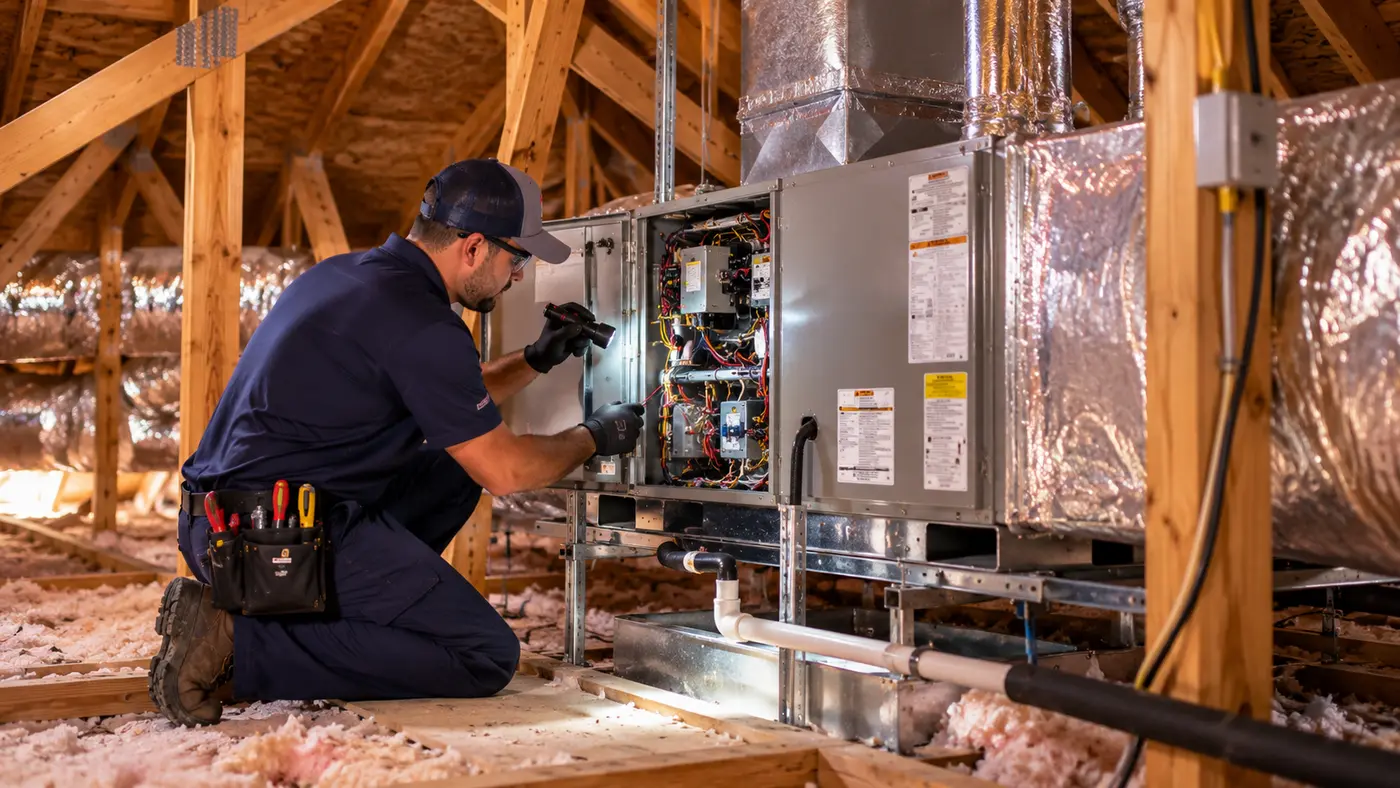
The furnace has been asleep since spring. Wake it gently.
A Phoenix furnace lives a strange life. It sits in a garage, a hall closet or an attic that bakes all summer, and for months it does nothing but gather dust. Then one night the thermostat calls for heat, and a machine that has not fired since spring is asked to light a gas flame inside your home.
The calendar tells you when that night is coming. According to the National Weather Service, Sky Harbor's normal low falls from 65.6 degrees in October to 53.7 in November and 45.3 in December. Somewhere in that slide, every furnace in the Valley gets the same request on the same evening.
Why the fall, every year
ENERGY STAR recommends a heating check-up every fall. The Consumer Product Safety Commission and the CDC have long urged an annual professional inspection of fuel-burning heating systems, furnaces included, along with the flues and vents that carry exhaust out of the house. The reason is carbon monoxide, which the CPSC describes as colorless, odorless and toxic. You cannot smell a problem with a heat exchanger. You can only find it by looking.
The first heat of the season often brings a burning-dust smell. That is usually dust burning off inside the furnace, and it should fade quickly. A smell that lingers, a smell of gas, or a carbon monoxide alarm is a different matter entirely, and the answer is to stop and call.
What fails after a long idle summer
- Flame sensors. A thin metal rod that proves the burner actually lit. A light film of grime makes it doubt itself, and the furnace shuts the gas off seconds after lighting. It is one of the most common reasons a furnace starts, then quits.
- Ignitors. Hot surface ignitors are fragile and wear with every start. One near the end of its life likes to fail on the first cold night.
- Dust. Garage and attic furnaces collect it all summer. It coats burners, loads the blower and clogs the filter.
- Vents and flues. The CPSC recommends checking them for blockage, leaks and loose or disconnected sections. Birds and rodents have opinions about vent openings.
- Drains on high-efficiency furnaces. Condensing furnaces make water and need a clear drain to keep running.
What the tune-up actually covers
ENERGY STAR's heating checklist names the essentials: gas connections, gas pressure, burner combustion and the heat exchanger, plus electrical connections, controls and the thermostat. A proper tune-up covers all of them, cleans the flame sensor and burners, checks the ignitor and the safety switches, tests for carbon monoxide, and leaves you with a clean filter. You see what the technician sees. If a part is failing, you get a flat-rate price before any work begins.
Our heating maintenance page describes the service year-round; this page is about timing it to the Phoenix fall. For the full reasoning on when to book, read when to tune up your furnace in Phoenix, and for how these machines work, see the gas furnace guide.
If the tune-up finds something
Most findings are small: a sensor to clean, an ignitor to replace, a filter that should have been changed in July. If you want to know what repairs typically run before anyone opens the cabinet, we have written up what it costs to fix a furnace, the most common furnace repairs and the most expensive one, with published national figures. If your furnace stops working entirely, call for emergency heating repair.
Pair this visit with a fall AC check, and ask about our maintenance membership, which turns both into appointments you never have to remember.
The Phoenix season window
Tune the furnace before the first cold night
What the tune-up covers
- Inspects gas connections and checks gas pressure
- Checks burner combustion and cleans the burners
- Cleans and tests the flame sensor; checks the ignitor
- Inspects the heat exchanger for cracks, rust or soot
- Tests for carbon monoxide at the furnace and supply registers
- Checks the flue and vent for blockage and loose connections
- Tests limit and rollout safety switches and system controls
- Tightens electrical connections; checks the blower and replaces the filter
What you can do without tools
- 1Put in a fresh filter before the first cold night, then check it monthly through the season.
- 2Test your carbon monoxide alarms. The CPSC recommends alarms on every level of the home and outside sleeping areas.
- 3Clear stored items away from the furnace, especially paint, fuel and cardboard in the garage.
- 4Make sure supply and return vents are not blocked by furniture or rugs.
- 5If you smell gas, leave the house without flipping switches and call Southwest Gas or 911 from outside.
- 6Never remove burner panels or bypass a safety switch.
More seasonal maintenance
Sources
- ENERGY STAR, Maintenance Checklist
- CPSC and CDC, Winter Home Heating Hazards release (Oct. 26, 2006)
- U.S. Consumer Product Safety Commission, Carbon Monoxide Information Center
- National Weather Service Phoenix, monthly climate summaries (Sky Harbor, 1991–2020 normals)
- Trane, Furnace Repair Cost (Sept. 11, 2024)
Updated October 26, 2026. Final diagnosis and scope are confirmed on site.
Fall furnace tune-up: common questions
Straight answers, no runaround. Don’t see yours? Our team is a phone call away, around the clock.
October or November, before the first cold nights. The National Weather Service's normal low at Sky Harbor drops to 53.7 degrees in November and 45.3 in December, and most furnaces get their first call for heat somewhere in that stretch.
Usually it is dust burning off inside the furnace after months of sitting, and the smell should fade within a short while. If it lingers, smells like gas, or your carbon monoxide alarm sounds, turn the system off, get everyone outside, and call.
Light use is exactly why. A furnace that sits idle collects dust, its sensors foul and its vents can be blocked. The CPSC and CDC recommend a professional inspection of fuel-burning heating systems every year, regardless of how much they run.
Gas connections and pressure, burner combustion, the flame sensor and ignitor, the heat exchanger, carbon monoxide testing, the flue and vent, safety switches, electrical connections, the blower and a fresh filter.
It depends on the part. Trane's published national figures put a flame sensor at $80 to $240 and an ignitor at $100 to $250, for example. We give you a flat-rate price before any work begins. For the full picture, read what it costs to fix a furnace.
Keep exploring
Every fall and winter page, homes and businesses.
Year-round furnace and heat pump service.
The full tune-up, any time of year.
Scheduled visits you never have to remember.
Savings on service and new systems.
Fall furnace tune-up throughout the Phoenix area
Same-day appointments across Maricopa and Pinal counties. Pick your city for local pricing pages, reviews and service details.
Light it before you need it
A fall tune-up checks combustion, ignition and venting before your furnace's first job of the year.
- 24/7 emergency service
- Upfront, honest pricing
- Licensed, bonded & insured