
Commercial fall heating start-up in Phoenix
On the first cold morning, every tenant in the building reaches for the thermostat at once. The gas heat on the roof should be ready before they do.
- Combustion analysis on gas-fired units
- Heat exchanger and venting inspection
- Ignition, flame sensing and safety controls
- Rooftop units, makeup air and unit heaters
Schedule today — we’re here 24/7.
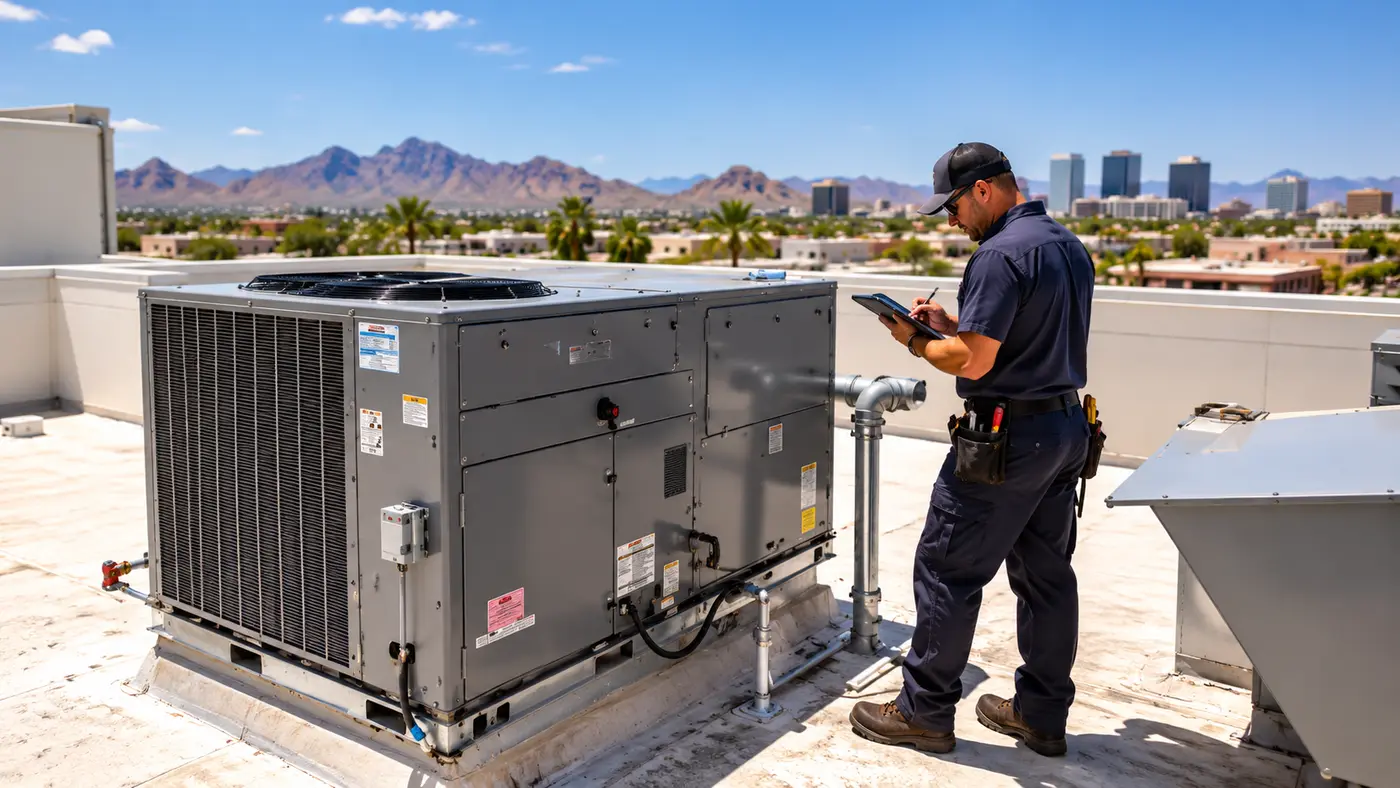
The heat section has not fired since spring.
On most Phoenix commercial roofs, heating is an afterthought built into the same cabinet as the cooling: a gas-fired heat section in a rooftop unit that spends eight months of the year doing nothing at all. Then one November morning the office manager arrives to a 58-degree lobby, every tenant turns their thermostat up at once, and equipment that has not lit a flame since spring is asked to heat the whole building before nine o'clock.
The National Weather Service's normal low at Sky Harbor drops from 65.6 degrees in October to 53.7 in November. Heating demand arrives quickly. A start-up visit makes sure the first morning is uneventful.
Combustion first, comfort second
Safety agencies have long urged annual professional inspection of fuel-burning heating equipment, and the reason is the same on a roof as in a house: carbon monoxide, which the Consumer Product Safety Commission describes as colorless, odorless and toxic. A cracked heat exchanger or a blocked flue does not announce itself. You find it by inspecting and by measuring.
That is why a proper start-up includes combustion analysis. The technician fires the heat section and samples the exhaust to see whether the burners are burning cleanly, then inspects the heat exchanger, the flue and the vent for cracks, corrosion, blockage and loose connections. Ignition, flame sensing and the safety switches are tested before the unit is trusted with the building.
Not every building heats from the roof
- Restaurants often run gas-fired makeup air units that replace the air the kitchen hoods exhaust. When they fail in winter, the dining room gets cold fast.
- Warehouses and shops commonly use ceiling-hung gas unit heaters, which collect dust all summer.
- Heat pump rooftop units heat without combustion, but their defrost operation and backup heat need checking before the season.
Our commercial heating maintenance page covers year-round service; this page is about getting the start-up right. For repairs, see commercial heating and furnace repair, and for a no-heat morning, commercial emergency heating repair.
Do it with the cooling service
Heating start-up pairs naturally with post-summer cooling service: same roof, same units, one trip. Every unit gets a written record covering both, so you know where the building stands before the first cold morning and before next summer.
The Phoenix season window
Tune the furnace before the first cold night
What heating start-up covers, per unit
- Fires the heat section and runs combustion analysis
- Inspects the heat exchanger for cracks, corrosion and soot
- Checks the flue and vent for blockage, leaks and loose sections
- Inspects gas connections and checks gas pressure
- Tests ignition, flame sensing and the inducer
- Tests limit and rollout safety switches
- Checks the blower, belts and filters
- Verifies heating schedules and setpoints; documents findings
What your staff can do
- 1Make sure carbon monoxide detection is in place and tested where your building requires it.
- 2Report any smell of gas immediately: evacuate, and call Southwest Gas or 911 from outside.
- 3Keep roof access clear and secure, and keep untrained staff off the roof.
- 4In restaurants, tell us if the kitchen feels drafty or hoods behave differently; makeup air may be failing.
- 5Note which suites complain first on cold mornings.
More seasonal maintenance
Sources
- CPSC and CDC, Winter Home Heating Hazards release (Oct. 26, 2006)
- U.S. Consumer Product Safety Commission, Carbon Monoxide Information Center
- National Weather Service Phoenix, monthly climate summaries (Sky Harbor, 1991–2020 normals)
Updated October 26, 2026. Final diagnosis and scope are confirmed on site.
Commercial fall heating start-up: common questions
Straight answers, no runaround. Don’t see yours? Our team is a phone call away, around the clock.
It is a pre-season service that fires each gas heat section, analyzes combustion, inspects the heat exchanger and venting, and tests ignition and safety controls before the equipment is relied on for the winter.
It measures what the burners are actually producing. Clean combustion means the unit is burning safely and efficiently; poor combustion can point to problems that a visual check alone would miss.
Short seasons are the reason. Equipment that sits for months gathers dust, its sensors foul and its vents can be blocked. Agencies such as the CPSC and CDC have urged annual professional inspection of fuel-burning heating equipment for that reason.
Yes. Restaurants, shops and warehouses often heat with makeup air units or ceiling-hung unit heaters, and they get the same combustion and safety checks as rooftop units.
Yes, and it usually should be. Pair the start-up with fall cooling service for one trip per roof.
Keep exploring
Every fall and winter page, homes and businesses.
Repair, installation and maintenance for Valley businesses.
Year-round service for commercial heating.
When a rooftop unit can't wait.
Plan service for one building or a portfolio.
Commercial fall heating start-up throughout the Phoenix area
Same-day appointments across Maricopa and Pinal counties. Pick your city for local pricing pages, reviews and service details.
Ready before the first cold morning
Combustion, venting and safety checks for every gas-fired unit on the roof.
- 24/7 emergency service
- Upfront, honest pricing
- Licensed, bonded & insured