
Commercial winter heating maintenance in Phoenix
The heating season in Phoenix is short and concentrated. When the equipment is working hardest is when a quiet problem turns into a cold building.
- Mid-season checks for hard-working equipment
- Makeup air units for restaurants
- Unit heaters for warehouses and shops
- Heat pump defrost and backup heat
Schedule today — we’re here 24/7.
Six weeks of real cold, and every unit runs at once.
Sky Harbor's normal December low is 45.3 degrees and January's is 46.0, the National Weather Service reports. For a Phoenix commercial building, that stretch is the entire heating season, compressed into a few weeks of cold mornings when every gas heat section, makeup air unit and unit heater in the building is asked to work at the same time.
Concentrated use exposes weak parts quickly: an ignitor near the end of its life, a flame sensor with a film on it, a belt that glazed over the summer, a filter loaded with the dust of a long, dry fall. A mid-season visit finds them while the fix is a part, not a closed dining room.
Where winter failures hurt most
- Restaurants. Kitchen hoods pull a great deal of air out of the building, and gas-fired makeup air units replace it. When a makeup air unit fails on a cold night, the dining room is the first place the customers notice.
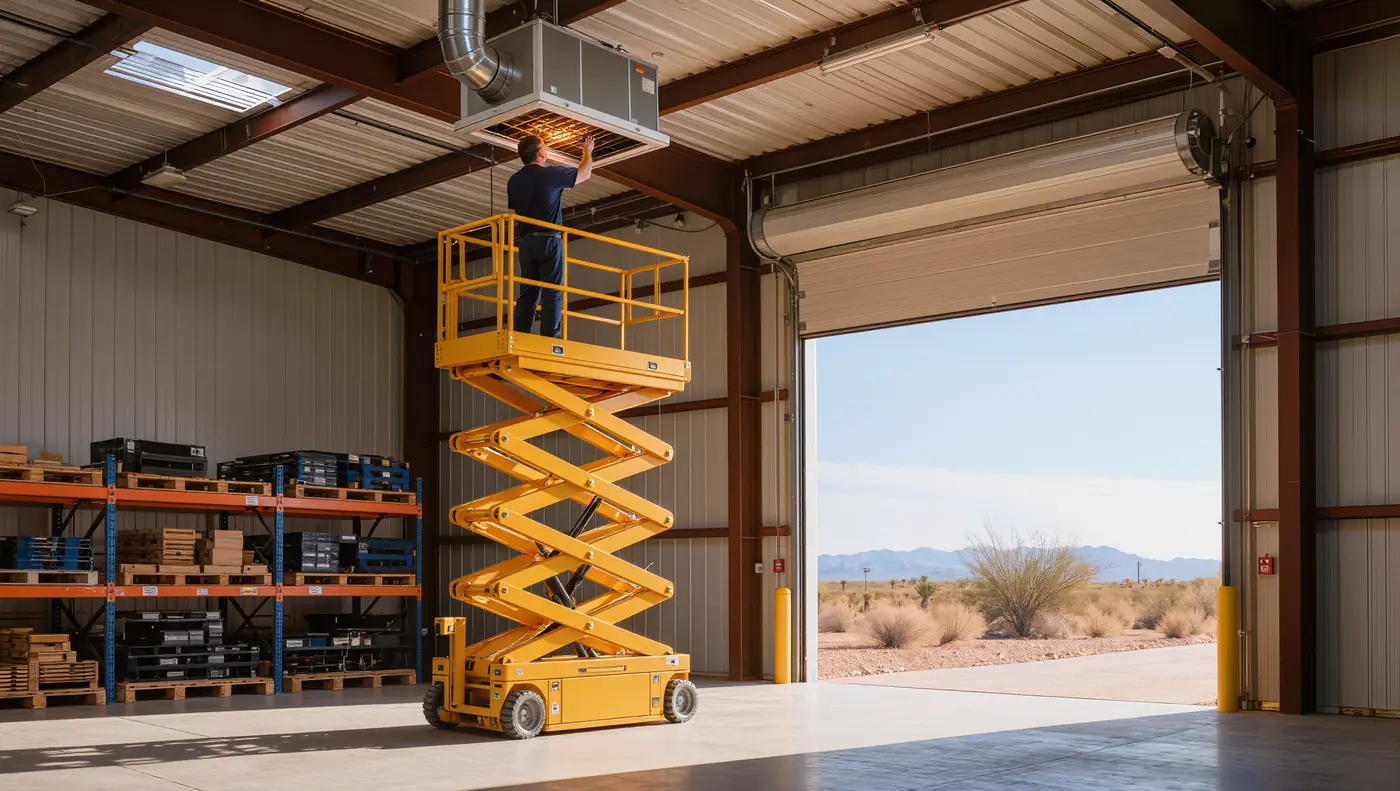
- Warehouses and shops. Ceiling-hung gas unit heaters work hard in big, open spaces, and their venting and burners need attention. Lift access is part of the job, so plan it.
- Offices and retail. Rooftop gas heat sections and heat pump units carry the load. A single failed unit can leave one suite cold while the rest of the building is fine, which is exactly how tenant complaints begin.
What a mid-season visit covers
The technician checks combustion and the flame on gas-fired equipment, tests ignition, flame sensing and the safety switches, inspects heat exchangers and venting, checks blowers, belts and filters, and tests for carbon monoxide. Heat pump rooftop units get their defrost operation and backup heat verified. Each unit's condition is written down, so the next visit starts where this one ended.
If the equipment had a fall heating start-up, a winter visit is mostly about the hardest-working units and anything that has started to complain. If the start-up was skipped, a winter visit is the start-up, late.
When it stops working
A no-heat call at six in the morning is the one nobody plans for. Our commercial emergency heating repair page covers what to do and how to reach us, and commercial heating and furnace repair covers the fixes. For the cooling side of the winter plan, see commercial winter AC care.
The Phoenix season window
The furnace's working weeks: watch for warning signs
What a winter visit covers, per unit
- Checks combustion and flame on gas-fired equipment
- Tests ignition, flame sensing and the inducer
- Tests limit and rollout safety switches
- Inspects heat exchangers, flues and venting
- Checks blowers, belts and filters
- Tests for carbon monoxide
- On makeup air units: verifies operation with the kitchen exhaust
- On heat pump RTUs: checks defrost operation and backup heat
What your staff can do
- 1Log cold-suite complaints with dates and times; patterns point to specific units.
- 2Report any smell of gas immediately: evacuate, and call Southwest Gas or 911 from outside.
- 3Do not reset equipment that keeps locking out. Call instead.
- 4Keep the area under warehouse unit heaters clear of stacked materials.
- 5Make sure carbon monoxide detection is in place and tested where required.
More seasonal maintenance
Sources
- National Weather Service Phoenix, monthly climate summaries (Sky Harbor, 1991–2020 normals)
- U.S. Consumer Product Safety Commission, Carbon Monoxide Information Center
Updated October 26, 2026. Final diagnosis and scope are confirmed on site.
Commercial winter heating maintenance: common questions
Straight answers, no runaround. Don’t see yours? Our team is a phone call away, around the clock.
Hard-working equipment, units that skipped a fall start-up, and anything that has started short cycling or locking out benefit from a mid-season visit. Units that were started up in the fall and are behaving may not need one.
In a restaurant, kitchen hoods exhaust a lot of air. A makeup air unit replaces it, and in winter it heats that incoming air. If it fails, the building pulls in cold air and the dining room feels it first.
Common causes include a dirty flame sensor, a failing ignitor, a venting problem or a tripped safety switch. Repeated shutdowns are a reason to call, not to keep resetting it.
The CPSC advises getting everyone outside to fresh air immediately and calling 911. Do not re-enter to look for the cause.
Keep exploring
Every fall and winter page, homes and businesses.
Repair, installation and maintenance for Valley businesses.
Year-round service for commercial heating.
When a rooftop unit can't wait.
Plan service for one building or a portfolio.
Commercial winter heating maintenance throughout the Phoenix area
Same-day appointments across Maricopa and Pinal counties. Pick your city for local pricing pages, reviews and service details.
Keep the building warm through the cold weeks
Mid-season service for gas heat sections, makeup air units, unit heaters and heat pump rooftop units.
- 24/7 emergency service
- Upfront, honest pricing
- Licensed, bonded & insured