When should you tune up your furnace in Phoenix?
The first cold night in the Valley is the busiest heating day of the year. Here is how to find out your furnace is broken a month before it matters.
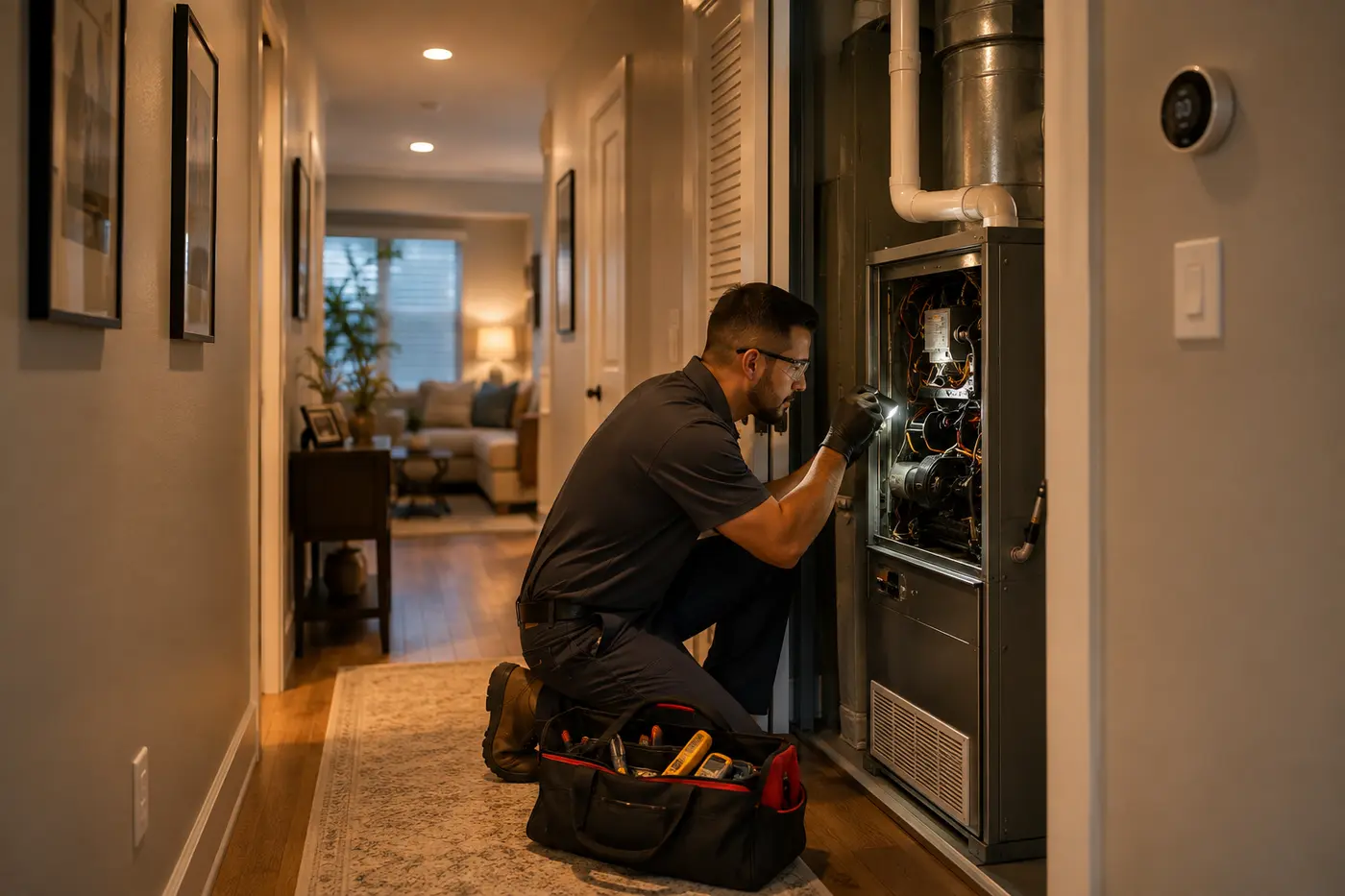
The honest answer is October, and it has nothing to do with the furnace itself. It has to do with the calendar. The first real cold night in the Valley usually lands in late November or December, and when it arrives, every heating system that spent the summer quietly dying in an attic announces it at the same time. The phones light up, the schedule fills, and the people who waited get to keep waiting, in a cold house.
Book the same visit in October and the whole picture inverts. The weather is pleasant, the calendar is open, and if the technician finds a part on its way out, you have weeks to handle it on your terms instead of hours to handle it on the furnace's terms. Same inspection, same price, completely different experience.
Run the test yourself first
You do not need us for the opening move. Pick a mild evening, set the thermostat to heat, and let the system run for fifteen or twenty minutes. A burnt-dust smell for the first few minutes is normal — that is eight months of attic dust cooking off the heat exchanger. What is not normal: warm air that never arrives, a system that fires up and shuts back down over and over, a smell that outlasts the first cycle, or silence. Any of those means you just found a December problem in October, which is the entire point of the exercise.What a Phoenix summer does to a furnace
A gas furnace here might run four hundred hours a year, but it spends June through September in an attic that can pass 140 degrees, and that heat ages components whether they are running or not. The failure list is short and predictable: hot surface igniters that turn brittle and crack on the first cold start, flame sensors carrying enough oxidation that the furnace lights and then immediately talks itself out of it, and capacitors and blower motors that gave up sometime in August without telling anyone.The part of the visit that is not negotiable
On any gas furnace, a proper tune-up includes a combustion and carbon monoxide check. If nobody puts an analyzer on your system, you bought a filter change with a clipboard. And whoever services your equipment, put a working CO detector on every sleeping level of your home and test it when you change the clocks. We laid out the full case in the desert gets cold too; the short version is that this check is the reason heating maintenance exists.What it costs
A heating tune-up covers ignition, combustion, safety controls, blower, and airflow, with a written record of what we measured. Our maintenance memberships start at $149 a year and include the heating visit, which turns this whole article into a single reminder on your phone: when the mornings turn nice, schedule it.If you heat with a heat pump
Roughly half the Valley heats with the same outdoor unit that cooled the house in July, just running in reverse. Those systems need a fall check too, but a different one — reversing valve, defrost cycle, and the auxiliary heat strips that can quietly double a winter bill when they stick on. If you already had a spring tune-up, say so when you book. Some of the work overlaps, and there is no reason to pay for the same checks twice.If the first cold night already came and your house lost, skip the checklist — our emergency heating repair runs 24/7, holidays included. Otherwise pick a mild week in October, call (480) 863-5855, and let the visit be boring. Boring is what maintenance is for.
Need this handled, not just explained?
Same-day service across the Valley, upfront flat-rate pricing, and NATE-certified technicians available 24/7.