The desert gets cold too
Phoenix heating systems sit idle for eight months, then get asked to perform on the coldest night of the year. That is exactly why they fail.
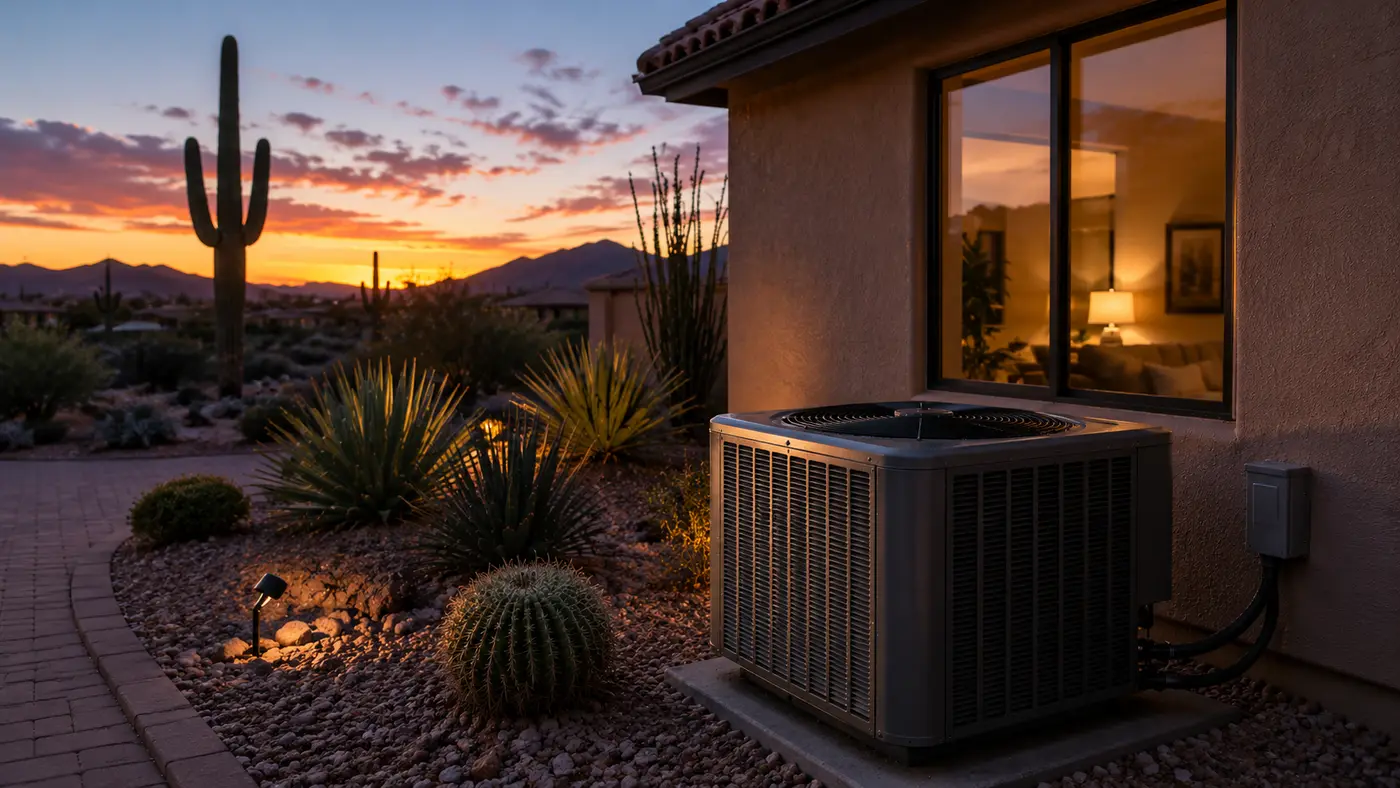
People who move here from the Midwest laugh the first time somebody mentions furnace service in Phoenix. Then January arrives, the sun drops behind South Mountain, the temperature falls into the thirties overnight, and the laughing stops around 2 a.m. in a house that will not warm up.
Valley heating equipment lives an unusual life. It works a handful of weeks a year and rests the rest, often in a hot attic or a closet that bakes all summer. That duty cycle creates a specific failure pattern: systems do not wear out from use here, they seize up from disuse and heat aging — and they reveal it on the first genuinely cold night, which is precisely when every HVAC company in the metro is already booked.
What actually fails
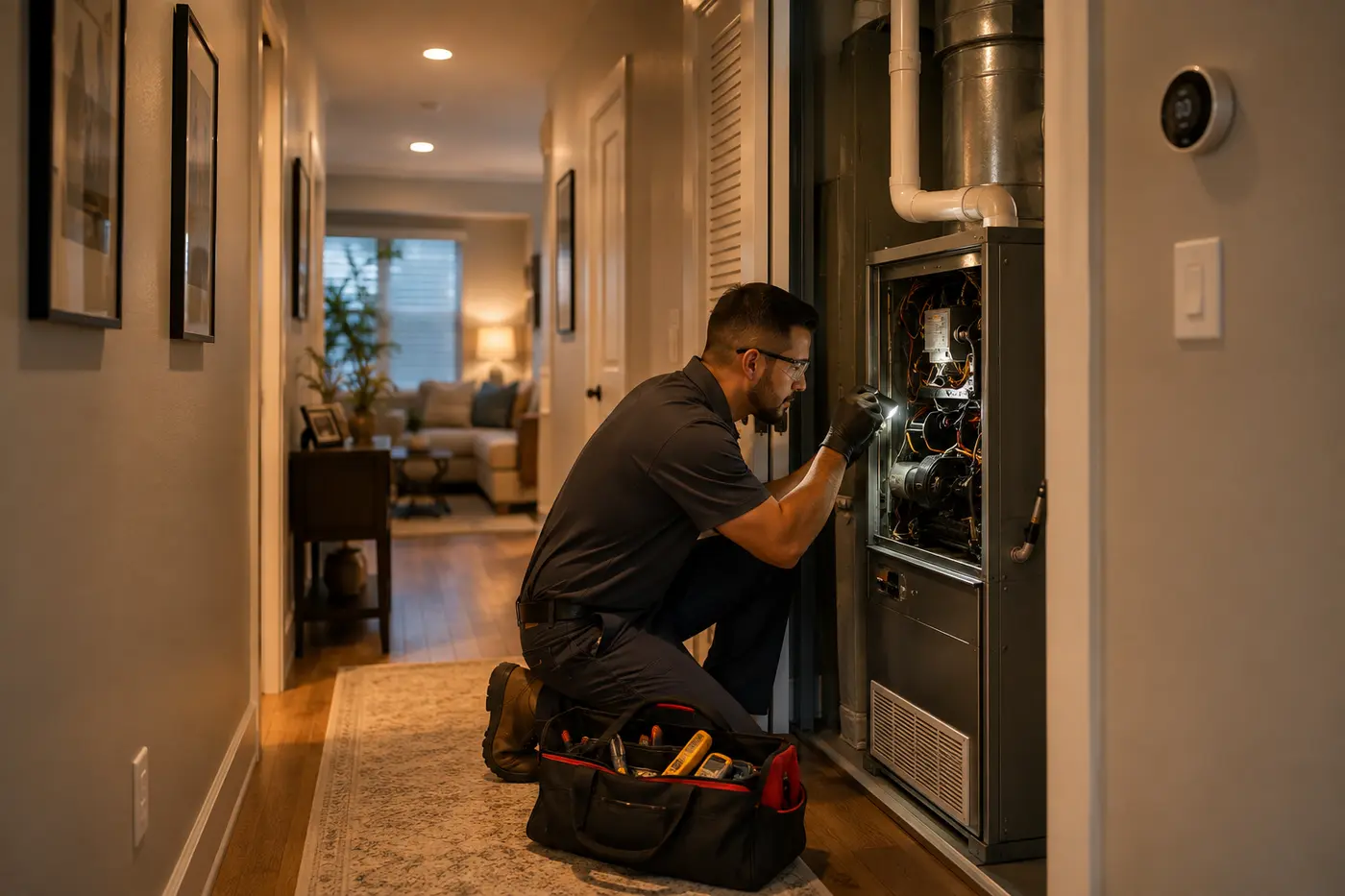
Igniters and flame sensors lead the list. Both are consumable parts that degrade quietly and then refuse to do their job on the first cold start. Blower motors and capacitors follow, having sat idle through a summer in an attic. And in older gas equipment, we sometimes find the failure nobody wants: a cracked heat exchanger.The one that is not about comfort
A cracked heat exchanger can put carbon monoxide into the air your family breathes. It is invisible, odorless, and it does not care how new your thermostat is. This is why every heating repair and maintenance visit we perform includes a combustion and carbon monoxide check on gas equipment. It is not a line item we upsell. It is the job.If you have a gas furnace and it has never been inspected, that is the single best reason to schedule a heating tune-up — better than efficiency, better than reliability. Put a working CO detector on every sleeping level of your home as well. They are inexpensive and they do not get tired.
Furnace or heat pump for Phoenix?
Both work here, and the honest answer depends on your home. Heat pumps handle our mild winters efficiently and cool in summer, which means one system to maintain instead of two. Gas furnaces deliver hotter air faster, which some people simply prefer on a cold morning. What matters more than the choice is the sizing and the installation — a well-installed average system will outperform a poorly installed premium one every time.Test it in October, not January
Here is the cheapest advice in this article. On a mild fall evening, turn your heat on and let it run for fifteen minutes. You may smell a little dust burning off, which is normal. What you are checking for is simple: does it start, does it get warm, does it stay running, and does anything smell like gas or scorching. If any of those answers is wrong, you have found your problem in October — on your schedule, at normal rates, with a fully staffed shop.If it is already cold and your heat is out, do not wait it out under blankets. Our emergency heating service runs 24/7, holidays included. Call (480) 863-5855.
Need this handled, not just explained?
Same-day service across the Valley, upfront flat-rate pricing, and NATE-certified technicians available 24/7.