
AC Condensate Leak and Water Damage
A puddle under the air handler or a spreading ring on the ceiling is a ten-minute problem before it becomes a drywall problem. Here is what to do in the next hour, and what to leave to a technician.
- Shut it off before the pan overflows
- Clogged drain line is the usual cause
- Wet-vac the outside stub, nothing more
- Attic units need a float switch check
Schedule today — we’re here 24/7.
Check these first
Water where it should not be is a ten-minute problem before it becomes a drywall problem. Do these, in this order, and nothing else.- Turn the system off at the thermostat. Set it to Off, not just a higher temperature. A coil that keeps running keeps making water, and in a Phoenix July that can be gallons a day.
- Look at the air handler. In most Valley homes it lives in a hall closet, the garage, or the attic. Standing water in the pan beneath it, a wet platform, or a damp ring on the ceiling under an attic unit all point the same direction.
- Find the float switch. A small plastic device clipped to the drain line or sitting in the pan. If it has tripped, the system may already have shut itself off and the thermostat may be dark. That is the switch doing its job. Do not bypass it.
- Towels and a bucket. Soak up what you can. Move boxes, rugs, and anything electrical out of the wet zone.
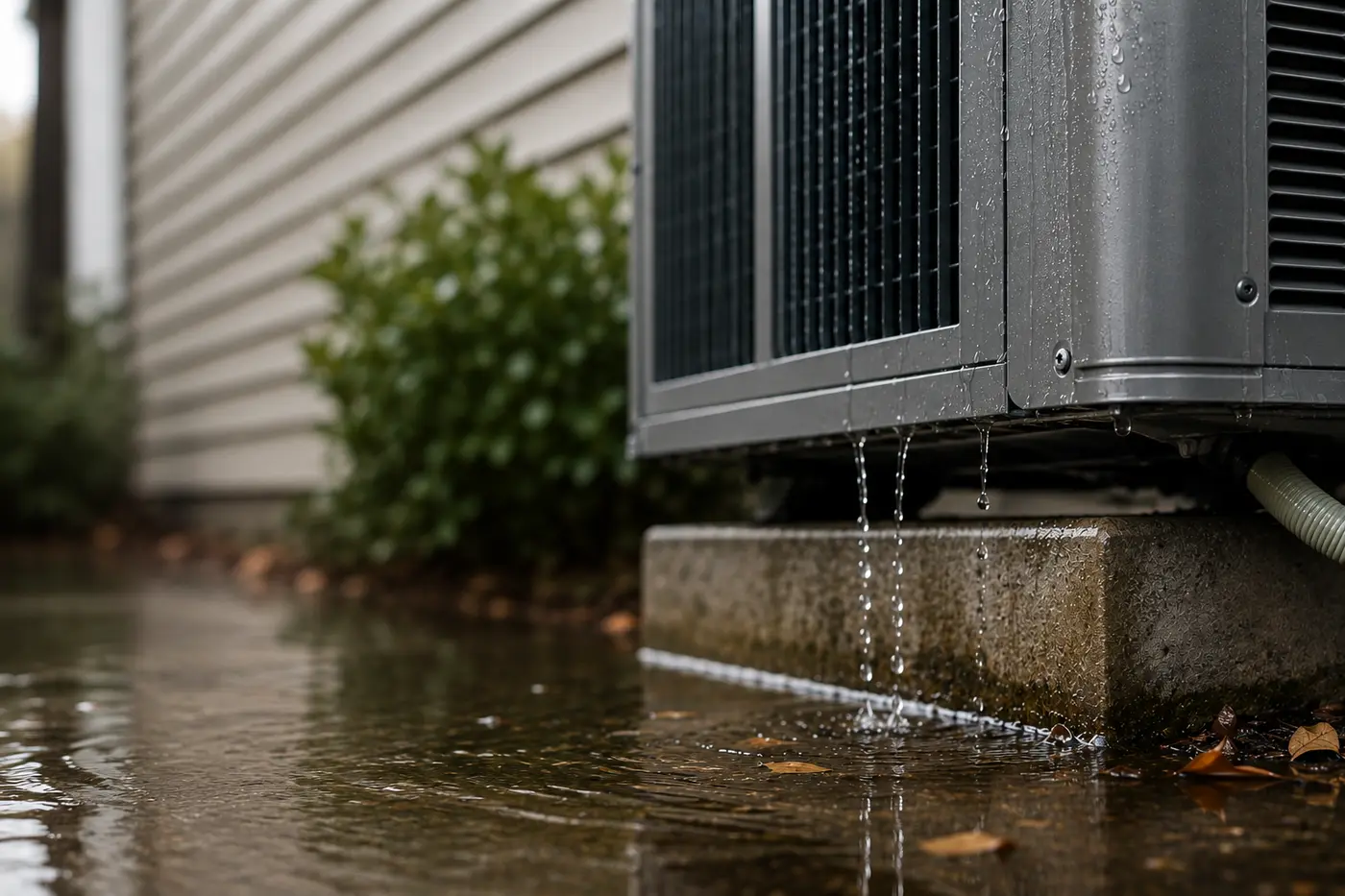
- Wet-vac the exterior drain stub. Outside, near the outdoor unit or along a stucco wall, you will find a short PVC pipe ending in open air. Seal a shop-vacuum hose against it with a rag and run it for a minute or two. If a plug of gray sludge comes out, you have found the cause.
- Do not pour bleach or vinegar into a line that is already backed up, open the air-handler cabinet, or climb into a 155-degree attic to look for the leak. If your home has a rooftop package unit, the drain is on the roof and the leak shows as a stain around a roof jack. Stay off the roof.
What it usually means
An air conditioner is a dehumidifier that happens to cool. Every hour of runtime pulls moisture out of the air, drips it off the indoor coil into a pan, and sends it down a drain line to the outside. In dry months the flow is a trickle. During monsoon it can be a steady stream. The plumbing that carries it away is a three-quarter-inch pipe with a handful of joints, no pump, and nothing but gravity going for it.The clogged drain line
The culprit by a wide margin. Haboob dust rides in through the return, meets the wet coil, and becomes silt. Add algae, which thrive in a warm damp pipe, and the line narrows until it stops. Water backs up into the pan and over the edge. If the pan is in an attic, the ceiling is next.The float switch that did its job
Anything installed or inspected in the last two decades should have one. When water rises it cuts power to the system, which is why a leak sometimes announces itself as a thermostat that has gone blank. Inconvenient, and far cheaper than a ceiling.A cracked or rusted pan
Primary pans are plastic or coated steel. Older ones crack, sag, or rust through at a seam. Secondary pans under attic units catch the overflow, but they too have a drain, and that drain also clogs.A frozen coil, thawing
If the water arrived right after a stretch of weak airflow, it may be a melting ice block rather than a plumbing fault. A packed filter, low refrigerant, or a failed blower can all freeze the coil. Read frozen evaporator coil before assuming the drain.Installation shortcuts
A drain line with no trap, no slope, or a long flat run across a garage ceiling clogs faster and drains slower. Tract homes built in a hurry are not exempt.Stop and call if
- Water is coming through a ceiling or a light fixture. Shut the system off at the thermostat, then call.
- The wet-vac pulled nothing and the pan is still filling.
- The float switch has tripped more than once this season.
- The pan itself is cracked or rusted through.
- You see ice anywhere on the indoor unit or the copper lines.
- Anyone in the home is elderly, an infant, pregnant, or has a condition that makes heat dangerous. A shut-down system on a 112-degree afternoon is not a wait-until-Monday situation. Move them somewhere cool and call the 24/7 line.
What an on-site visit sorts out
A technician clears the line from both ends, tests the float switch, inspects the primary and secondary pans, confirms the trap and slope, and reads coil temperatures to rule out a freeze. If the coil is rusting or the pan has failed on an older system, that becomes a conversation about age and condition, and we would rather have it honestly than sell a part to a unit on its last summer. Our repair-versus-replace guide shows how we weigh it, and estimates and financing on approved credit are explained separately so there are no surprises. A web page cannot see your pan, your ceiling, or the inside of your air handler and coil. A visit can.How to not do this again
Drain lines clog on a schedule, and the schedule is set by dust. A spring maintenance visit that flushes the line, tests the float switch, and changes the filter prevents most of the leaks we see. If your air handler sits in the attic and has no secondary pan or float switch, ask for one; it is the cheapest insurance in the house. For water that has already reached drywall, photograph everything before it is cleaned up. And if you want the deeper physics of why the water is there at all, we wrote a separate field note on why an AC leaks water. This page is about the next hour.AC Condensate Leak and Water Damage: common questions
Straight answers, no runaround. Don’t see yours? Our team is a phone call away, around the clock.
Not while the line is backed up; it will sit in the pan and do nothing. Once a technician has cleared the line, a cup of distilled vinegar at the indoor access tee every month or two in cooling season slows algae, if your line has an accessible tee. If you cannot find one, do not improvise through the pan.
The float switch cut power to the system. It is working as designed. Do not bypass it or jumper it; once the line is cleared and the pan is dry, the switch resets on its own and the thermostat comes back. If it does not, the thermostat blank page covers the next checks.
Usually you do not, which is why a secondary pan and float switch matter. Early signs are a system that shuts itself off, a musty smell near the attic hatch, or a faint dark ring on the ceiling below the unit. Do not climb into a 155-degree attic to check; ask us to.
It is plain water pulled from the air. The concern is what it soaks, not what it contains: drywall, insulation, flooring, and the wooden platform the unit sits on. A wet platform that is left wet is how a leak turns into a structural repair.
Some condensate discharge onto the roof is normal in humid weather, and rooftop drains are designed for it. A steady stream that pools against a parapet, or a stain appearing inside around a roof jack, is not. Do not go on the roof. Our rooftop unit page explains how these systems drain.
It depends on the policy, and we are not in a position to interpret one. Many policies treat sudden events and gradual leaks differently. Photograph the damage before cleanup, keep the service invoice, and note the date the leak was found.
At least once a year, at spring maintenance, before the humidity arrives. Twice if the air handler is in an attic or the line has clogged before. Our AC maintenance visit includes it.
A partial blockage further downstream, a line with poor slope, a missing or dry trap, a cracked pan, or a coil that is freezing and thawing in cycles. Repeated trips deserve a proper diagnosis, not another reset.
Condensate Leak Repair throughout the Phoenix area
Same-day appointments across Maricopa and Pinal counties. Pick your city for local pricing pages, reviews and service details.
Stop the water, then find out why
Book an on-site visit to clear the line, test the float switch, and check the pan before the ceiling pays for it.
- 24/7 emergency service
- Upfront, honest pricing
- Licensed, bonded & insured