Why is my AC leaking water?
A Phoenix air conditioner pulls gallons of water out of the August air every single day. All of it has one narrow escape route, and this is what happens when that route fails.
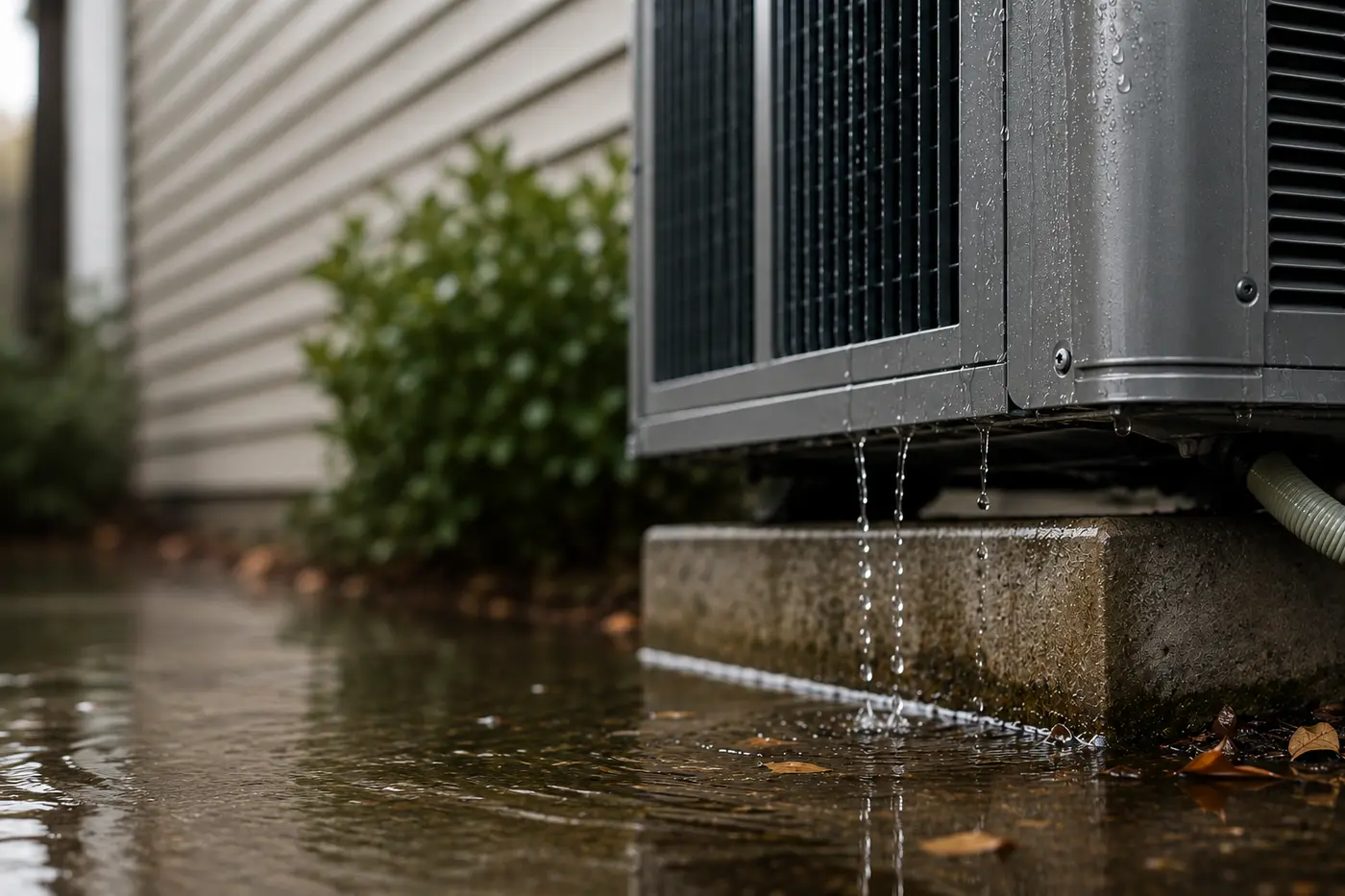
It shows up as a puddle next to the indoor unit, or as a brown ring spreading across the hallway ceiling. Water, in a Phoenix August, produced by a machine you thought only handled heat. It surprises homeowners every year, and the explanation starts with what an air conditioner actually is: half cooling machine, half dehumidifier.
Where the water comes from
As air crosses the cold indoor coil, moisture condenses on the metal the way it beads on a glass of iced tea. In June, with the desert bone dry, that is barely a trickle. During monsoon season, when the humidity arrives, a residential system can wring five to fifteen gallons a day out of your air. Every drop is supposed to fall into a pan under the coil and run out through a PVC line, usually ending at a little stub of pipe poking out of an exterior wall that you have never once thought about. Water around the unit means that path failed. Here are the ways it fails, in the order we actually find them.1. The drain line is clogged
The clear winner. The pan is dark, damp, and warm, which is ideal real estate for algae and bacterial slime, and eventually the growth becomes a plug somewhere in the line. Water backs up, fills the pan, and goes over the edge. If your unit lives in the attic or a hall closet, over the edge means into drywall.2. The drain pan rusted or cracked
Metal pans on systems past twelve or fifteen years rust through from decades of sitting wet; plastic ones go brittle in attic heat and crack. The line is fine, but the water never reaches it. A pan swap is a routine flat-rate repair, though on an old system it is one more vote in the repair-or-replace column.3. The coil froze, and now it is melting
A coil iced over by a clogged filter or low refrigerant turns into a block of ice that melts between cycles, faster than the pan and line were sized to handle. If you see frost on the copper line, or the water arrives in bursts after the system shuts off, read our piece on frozen coils before anything else. The water is the symptom, not the disease.And number four: the line simply came apart. We still find condensate fittings that were dry-fit at installation and finally slipped loose a decade later. One more thing while we are here: if your system shut itself off and refuses to run, and there is standing water in the pan, that is probably the float switch doing exactly its job. It kills the system before the pan overflows. Irritating, yes, but it just saved your ceiling. Do not bypass it.
What to do right now
Shut cooling off at the thermostat, because every hour of runtime adds another gallon or two to the problem. Towels under the unit, and move anything stored nearby. Then, if you own a wet/dry vac, take it outside to that PVC stub, seal the vac hose against it with a rag and your hand, and run it for two full minutes. That pulls the algae plug out backward, and it genuinely solves a good share of these calls for the price of nothing. If water starts trickling from the stub afterward, you have fixed it, for now. Clogs that clear this way like to come back.When to call instead
Call if the vac trick does not get the line flowing, if there is water in a ceiling, if the pan itself is damaged, or if the coil is frozen. Water compounds by the hour inside drywall, so a spreading stain is a same-day problem, which is what 24/7 emergency service exists for. Anything short of that, a standard repair visit clears the line, treats it so the algae takes longer to regrow, and tests the float switch, at a flat price agreed before work starts. There is $50 off any repair booked online.The quiet good news: a water leak is one of the cheapest things an air conditioner can do to you, provided you catch it before the drywall does. If there is water where water should not be, call (480) 863-5855 and we will get a technician out today.
Need this handled, not just explained?
Same-day service across the Valley, upfront flat-rate pricing, and NATE-certified technicians available 24/7.