
Panasonic HVAC Systems in Phoenix
Panasonic's footprint in Phoenix homes runs from inverter mini splits on the wall to the small balanced-ventilation units in the ceiling. Both deserve service by someone who understands them, and neither should be replaced on a hunch.
- Exterios and ClimaPure mini splits
- Legacy ductless heads still in service
- WhisperComfort ERV and exhaust fans
- Independent service, quoted flat-rate
Schedule today — we’re here 24/7.
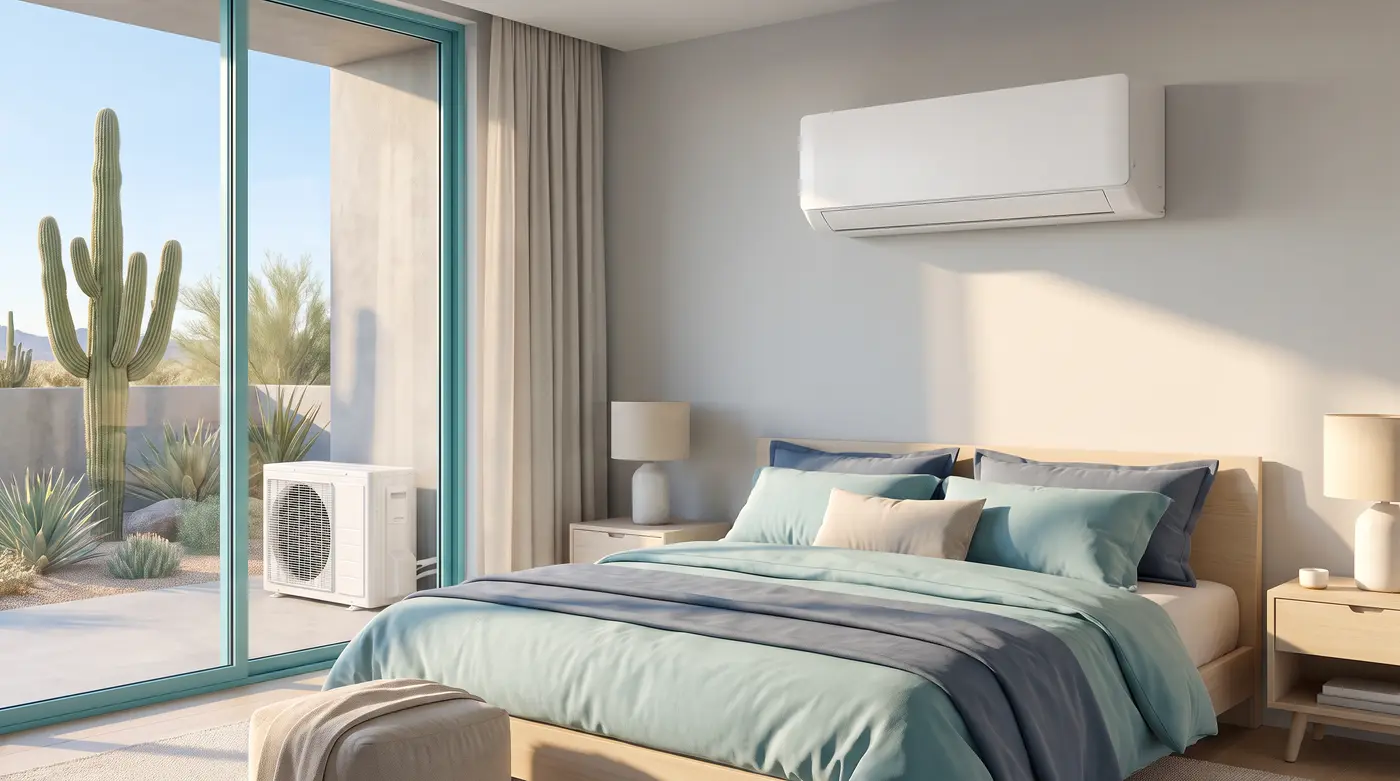
Independent service. Bleuwave HVAC is not affiliated with, endorsed by, or an authorized dealer of Panasonic. Panasonic and related product names are trademarks of their owners. We service and replace this equipment as an independent contractor.
About Panasonic
Panasonic is a manufacturer most people know for something other than air conditioning, which is precisely why its equipment tends to be underestimated. The brand is its own parent: Panasonic HVAC equipment is made and sold under the Panasonic name, and the company also absorbed the Sanyo ductless business, which is why an old Sanyo head and a newer Panasonic outdoor unit sometimes share a story. Detailed corporate history beyond that is research pending.
Bleuwave HVAC is an independent service company. We are not affiliated with, endorsed by or an authorized dealer of Panasonic, and we make no claim of factory training or manufacturer certification. Panasonic, Exterios, ClimaPure, WhisperComfort and related names are trademarks of their owners. We work on the equipment because it is in Phoenix homes and it needs work.
Panasonic product families found in Phoenix homes
There are two distinct product lines, and they answer different questions.
Ductless mini splits
The current families are Exterios and ClimaPure, both inverter-driven single-zone and multi-zone systems. Alongside them is a population of legacy ductless families, installed years ago and still running in guest rooms, upstairs offices and the primary suites of two-story homes where the central system never quite reached. Capacities, efficiency figures and model designations beyond the family names are research pending.
Ventilation
The WhisperComfort ERV is a compact energy-recovery ventilator: it moves stale indoor air out and outdoor air in through a core that transfers heat and moisture between the two streams, so the incoming air arrives closer to indoor conditions than it started. Panasonic's ventilation fans handle spot exhaust in bathrooms and laundry rooms. In a tightly built Phoenix home, this is the equipment that gives the house a controlled way to breathe. We describe what it does mechanically; what it does for anyone's health is not a claim we make. Our indoor air quality guide covers how ventilation fits alongside filtration and humidity control.
Common problems and repair considerations
Inverter mini splits are consistent in how they fail, and Phoenix is consistent in how it accelerates the process.
- Weak cooling in the afternoon. Often a charge issue, a dirty outdoor coil, or an outdoor unit sited where a west wall bakes it from two o'clock on.
- Ice on the indoor coil. Low charge or restricted airflow. Shut the unit off and let it thaw before anyone diagnoses it.
- Condensate leaks. Monsoon weeks produce more water than a dusty drain can carry. Water on the wall means the drain, not the refrigerant.
- Error codes on legacy heads. Older families use older control logic. A code that means one thing on a current unit may mean another on a unit from a previous decade. The manual and the nameplate matter.
- ERV neglect. Energy-recovery cores and filters clog with haboob dust. A unit that has not been opened in years is moving less air than it should, and the house feels stuffy without anyone knowing why.
Homeowner checks stop at the surface: remote mode and setpoint, filter screens, one breaker reset, visible ice, debris around the outdoor unit. For the ERV, the filter is user-serviceable according to the manual; the core and the electrical are not a weekend project. Everything else is a technician's job, and we would rather you call than climb.
Repair vs replacement for a Panasonic system
Current-generation Panasonic ductless equipment usually earns a repair when a single component fails; it is well-built inverter equipment and the parts path exists. The harder conversation is the legacy head. Age, refrigerant type, a compressor or board on borrowed time, and the question of whether the room's needs have changed since it went in all enter the math. A legacy unit that has served a bedroom for fifteen years and now needs a major component is a candidate for replacement, and we will say so without theater.
The repair-vs-replace guide gives the framework. An older system's refrigerant type affects the decision as well, since some refrigerants are no longer produced. And when the answer is to leave the unit alone for another season because it is working and the repair is small, that is the answer we give.
Parts, warranty and service notes
Warranty terms are Panasonic's to set and interpret. They may involve registration, installation requirements and time limits that differ by component. We do not administer manufacturer warranty and we do not represent the brand; read your documentation and contact the manufacturer for coverage questions.
Parts for current Panasonic families are generally obtainable through distribution, though not always from the truck. Parts for legacy ductless families are less certain, and for some older units the honest answer is that a specific component may no longer be produced. We identify the part from the nameplate, quote flat-rate before work starts and tell you the lead time before ordering. Ventilation components such as ERV cores and filters follow the same process.
For any of this equipment, seasonal maintenance is the difference between a short life and a long one in this climate: coils cleaned, drains flushed, charge verified, ERV filter and core inspected. If the evaluation points toward replacement, financing on approved credit is available and the estimates page explains how a quote comes together. Sizing, diagnosis and scope are settled on site, not on screen.
Panasonic at a glance
- Current label
- Panasonic
- Former labels
- Sanyo ductless business absorbed into Panasonic (see Sanyo page)
- Parent relationship
- Panasonic
- Verified series / prefixes
- Exterios; ClimaPure; WhisperComfort
- Equipment types
- Single-zone and multi-zone ductless mini splits; energy-recovery ventilators and exhaust ventilation fans
- Configurations
- Inverter variable-speed ductless per seed; ventilation equipment is balanced ERV and spot exhaust; further detail research pending
- Refrigerant or energy source
- Electric inverter ductless cooling and heat pump equipment; refrigerant by model research pending. Ventilation equipment is electric.
- Era and status
- current, with legacy ductless families still installed
- Phoenix application
- Upstairs bedrooms and offices in two-story homes, guest rooms and casitas for ductless; ceiling or attic-mounted ERV and bathroom or laundry exhaust for ventilation
- Common search intent
- repair, no cooling, error code, maintenance, parts, replacement, cost, estimate, ERV service
Product families in the record
- Single-zone and multi-zone mini splitExterios; ClimaPure; legacy ductless familiesInverter ductless systems including older installed product families
- Energy-recovery ventilator and exhaustWhisperComfort ERV; ventilation fansCompact balanced ventilation and spot exhaust
Panasonic HVAC Systems in Phoenix: common questions
Straight answers, no runaround. Don’t see yours? Our team is a phone call away, around the clock.
It happens, because Panasonic took over the Sanyo ductless line and some installers paired across the transition. Whether a given pairing is correct depends on the specific families and their refrigerant, which only the nameplates can confirm. Do not assume compatibility when replacing either half. Our Sanyo page covers the legacy side.
It exchanges indoor air for outdoor air in balanced amounts, passing both streams through a core that transfers heat and moisture between them. The point is controlled ventilation for a tight house without dumping 112-degree air straight inside. We describe its mechanical function only; we make no claims about health outcomes.
An iced indoor coil points to restricted airflow or low refrigerant charge, and afternoon heat exposes whichever one it is. Turn the unit off, let it thaw completely and clean the filter screens. If the ice returns, the frozen coil field note explains what a technician checks next.
No. We are an independent contractor with no affiliation, endorsement or dealer status from Panasonic, and we do not claim factory training. We service Panasonic equipment because it is in our customers' homes, and we quote that service flat-rate before any work begins.
Sometimes. Current-family parts generally move through normal distribution; legacy-family parts may be discontinued or slow to source. We check availability from the nameplate before quoting a repair, and if the part does not exist we say so and lay out the replacement option honestly.
An ERV is a ventilation device, not a dehumidifier. Its core moderates the moisture in incoming air but does not remove it from the house. Run it as the system was designed to run; if the home feels humid, that is a question for a whole-home comfort assessment rather than a switch on the ERV.
More often than the manual assumes. Haboob season loads filters and cores with fine dust in weeks, not months. Check the filter monthly during dust season and follow the manual's interval otherwise; leave the core and the electrical side to a technician.
Panasonic service throughout the Phoenix area
Same-day appointments across Maricopa and Pinal counties. Pick your city for local pricing pages, reviews and service details.
Know before you replace.
An on-site evaluation tells you whether your Panasonic equipment needs a part, a cleaning or a successor, and what each option costs.
- 24/7 emergency service
- Upfront, honest pricing
- Licensed, bonded & insured