The refrigerant everyone is arguing about
You may have been told your system is about to become illegal, unserviceable, or worthless. Here is what the change actually is — and what it means for a system you already own.
Somewhere between the industry press and a salesman standing in your garage, the refrigerant transition turned into a scare story. Homeowners are being told their air conditioner is about to be outlawed, that parts will vanish, that they should replace a working system immediately or lose the chance. Very little of that is true, and the parts that are true are more boring than the pitch.
So let us separate what is actually happening from what is being sold.
What the change is
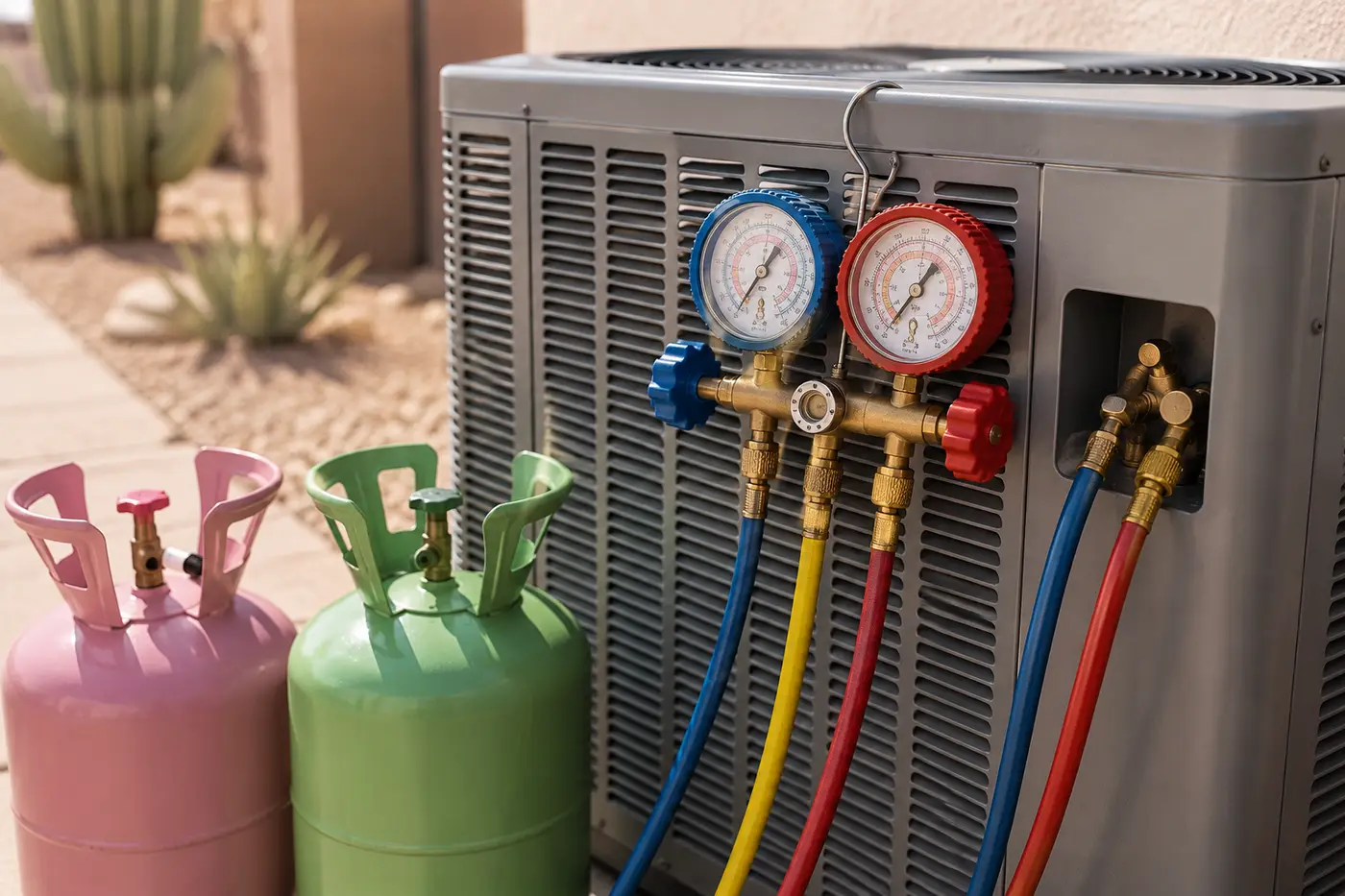
The industry is moving away from the refrigerant that has been standard in residential air conditioning for the last two decades, toward newer refrigerants with a lower global-warming impact. This is a manufacturing and environmental-policy shift, phased in over time, and it is the second such transition in living memory — the previous one moved the industry off R-22, which many Valley homes still had well into the last decade.The practical consequence is that newly manufactured equipment is built for the new refrigerants. That is the change. It is a change to what gets built, not a switch that turns off the system in your back yard.
What it means if you already own a system
Three things worth being clear about.Your existing system does not become illegal. Nothing about a phase-down of new manufacturing makes an installed, working air conditioner unlawful to own, run, or repair. Anyone telling you otherwise is selling, not informing.
It stays serviceable. Refrigerant for existing systems remains available for servicing, and technicians continue to work on them. What history suggests — based squarely on how the R-22 transition played out — is that supply tightens gradually and prices drift upward over a long period, rather than anything disappearing overnight.
It does change the repair-versus-replace math, slowly. This is the legitimate kernel inside the scare story. If you have an older system with a significant leak, the rising cost of recharging it is one more factor pushing toward replacement — the same way it eventually did for R-22 systems. That is a nudge on an existing calculation, not an emergency.
The honest test
Here is the question that cuts through it: would I be replacing this system anyway? If it is fifteen years old, leaking, and has cost you two repairs in two summers, the refrigerant situation is a reason to stop pouring money into it — but you were already there. If it is eight years old and running fine, the refrigerant transition is not a reason to replace it, and nobody should be telling you it is.We would rather you keep a good system running than sell you a new one on a deadline that does not exist. That is the whole basis of how we handle repair or replace.
If you are replacing anyway
Then the transition is genuinely useful information: you want equipment built for the current standard rather than the tail end of the old one, and you want an installer trained and equipped for the newer refrigerants, since they carry different handling requirements. Ask directly what refrigerant the proposed system uses and whether the crew is trained on it. A contractor who answers that clearly is a contractor paying attention.Regulations and timelines in this area continue to evolve, and the specifics can shift year to year — if you want the current rules for your exact situation, ask us and we will tell you what applies today. For a straight conversation with no deadline pressure, call (480) 863-5855, or price a replacement yourself with our instant estimate and see 0% financing if the timing works.
Need this handled, not just explained?
Same-day service across the Valley, upfront flat-rate pricing, and NATE-certified technicians available 24/7.