Is an AC surge protector worth it in monsoon country?
Monsoon season throws lightning at the grid and brownouts at your compressor, and neither one is covered by your warranty. Here is what a small sealed box at the disconnect actually buys you.
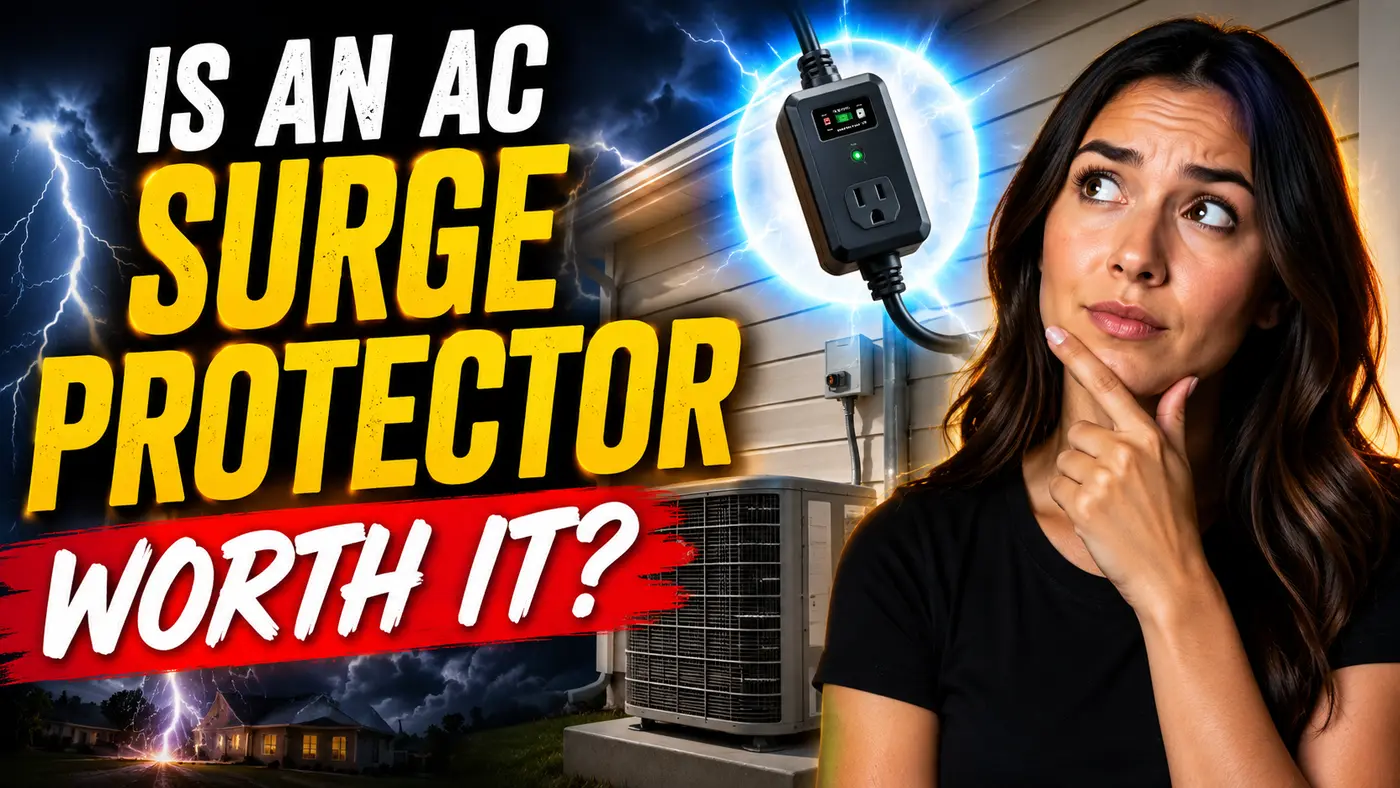
Monsoon season gives Phoenix two things at once: the best skies of the year and the worst power of the year. From late June into September the Valley gets thousands of lightning strikes, wind that takes down feeder lines, and — on the 115-degree afternoons in between — a grid strained enough that voltage sags across whole neighborhoods. Every one of those events travels down the wires into your house, where the most expensive single appliance you own sits waiting at the end of a 240-volt circuit. So the question we get on tune-ups all summer is a fair one: is a surge protector on the AC real protection, or an upsell?
What a surge does to an air conditioner
A voltage spike does not care what it hits first. In an AC, that is usually the capacitor — already the most heat-stressed part in the box — or the control board, which on a modern system is a genuine computer. Variable-speed and inverter equipment carries more electronics in the condenser than your first three laptops combined. A big enough hit can cook compressor windings outright. And surge damage is often partial: the part survives the event weakened, then fails three weeks later on a random Tuesday, looking for all the world like ordinary wear.Why the warranty probably will not help
Manufacturer warranties cover defects in the equipment, not what the power company or the sky did to it. A board or compressor that failed from a power event is routinely denied as a warranty claim. Homeowner's insurance may cover a documented lightning strike — minus your deductible and a claims process — but it will never cover the slow electrical abuse that actually kills most parts. Practically speaking, surge damage comes out of your pocket.Lightning gets the blame. Brownouts do the work.
The quiet killer in Phoenix is not the dramatic strike — it is low voltage on peak afternoons. When the grid sags, motors compensate by drawing more current, and more current means more heat in the windings. Your compressor is the biggest motor you own, and it takes this abuse on exactly the days it is already running flat-out. Then, when full voltage snaps back, the recovery itself arrives as a spike. A summer of sag-and-snap ages electrical parts fast, and it never shows up on the news the way a lightning storm does. Good HVAC surge protection handles both directions: it clamps the spikes, and better units shut the system down when voltage drops below safe limits instead of letting the compressor cook.What the device actually is
A dedicated HVAC surge protector is a small sealed unit wired in at the outdoor disconnect, right next to the condenser. When a spike comes down the line, it shunts the excess to ground and, if the hit is big enough, sacrifices itself so the equipment behind it survives — an indicator light tells you it is still on duty. Installed, the cost is modest: typically less than a single after-hours capacitor call, and a small fraction of the control board it is guarding.What whole-home protection adds
A whole-home surge protector mounts at your main electrical panel and takes the first hit for everything downstream — televisions, appliances, the garage door opener, all of it. Ideally you run both layers: the panel unit knocks big surges down, and the unit at the condenser catches what slips past, plus the smaller surges generated inside your own home every time a large motor cycles. If you can only do one and you are deciding purely on dollars at risk, protect the AC. Nothing else on your panel costs five figures to replace.The honest take
We spend a lot of these articles telling you when not to spend money. This is not one of those times. A device priced in the low hundreds standing in front of a system priced in the five figures, in a place that schedules its lightning season on the calendar, is about as clean as insurance math gets. The one exception: if your system is 15-plus years old and replacement is already on the horizon, skip the standalone install and have the protector included with the new equipment instead.The easiest way to add one is to not make it a separate appointment. We can install a surge protector during any maintenance visit or $129 tune-up, while the condenser panel is already open. And if a storm already got you — system dead after an outage, a breaker that will not hold, a dark control board — that is a repair call, and it is $50 off when you book online. Call (480) 863-5855 and ask us to take a look before the next cell rolls in.
Need this handled, not just explained?
Same-day service across the Valley, upfront flat-rate pricing, and NATE-certified technicians available 24/7.