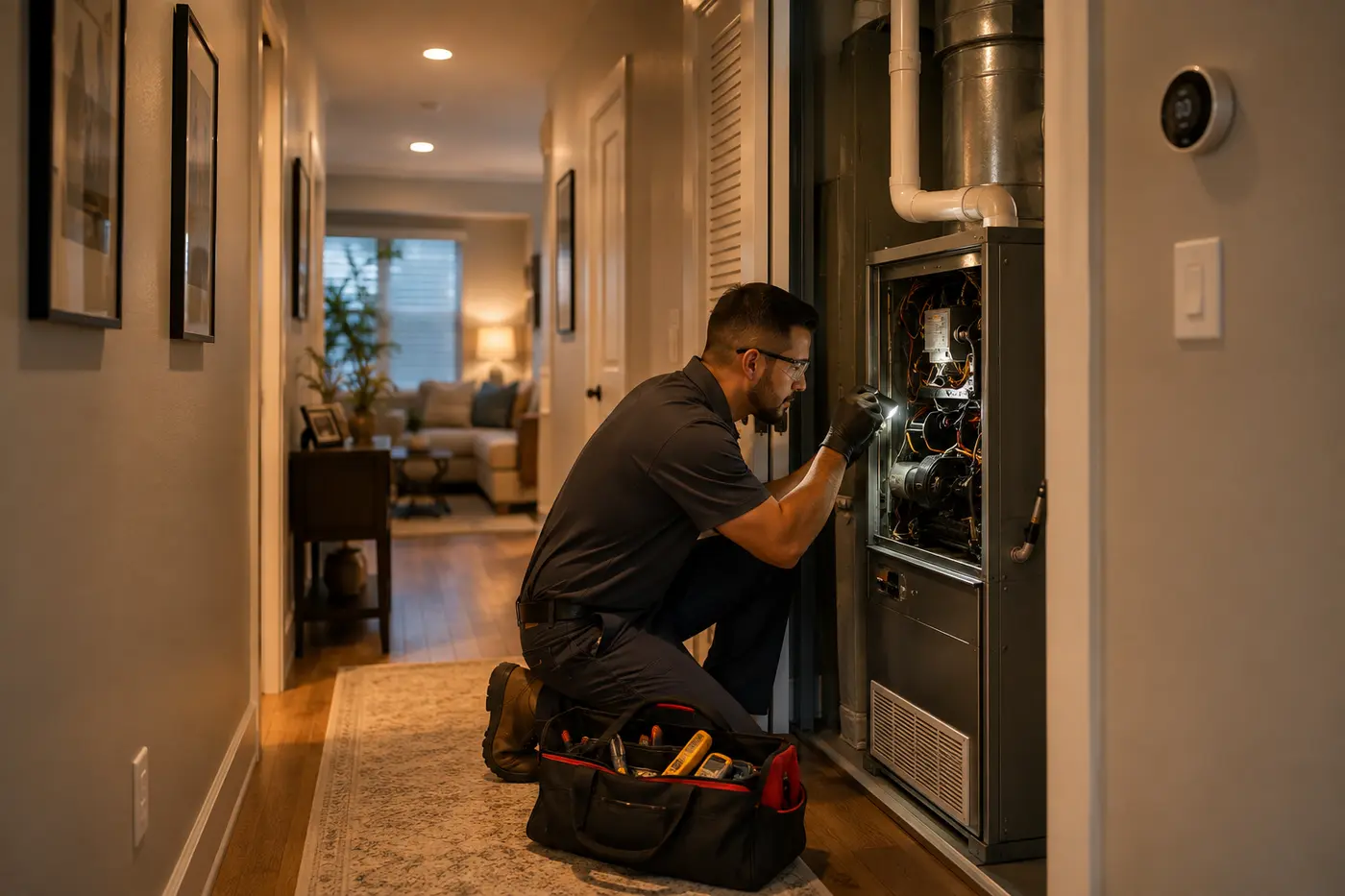
Why flush your water heater every year in the Valley
Phoenix serves some of the hardest municipal water in America, and every gallon leaves a little rock behind in your tank. Once a year, somebody should take the rock back out.
Phoenix tap water travels a long way to reach you — down the Salt, the Verde, and the Colorado, through canals and reservoirs, dissolving calcium and magnesium the entire trip. By the time it hits your house it typically measures 12 to 20 grains of hardness per gallon, and the scale calls anything over 10 very hard. Among big American cities, Phoenix sits at or near the top of the list. Your water heater is where all of that mineral content goes to retire.
The sediment math
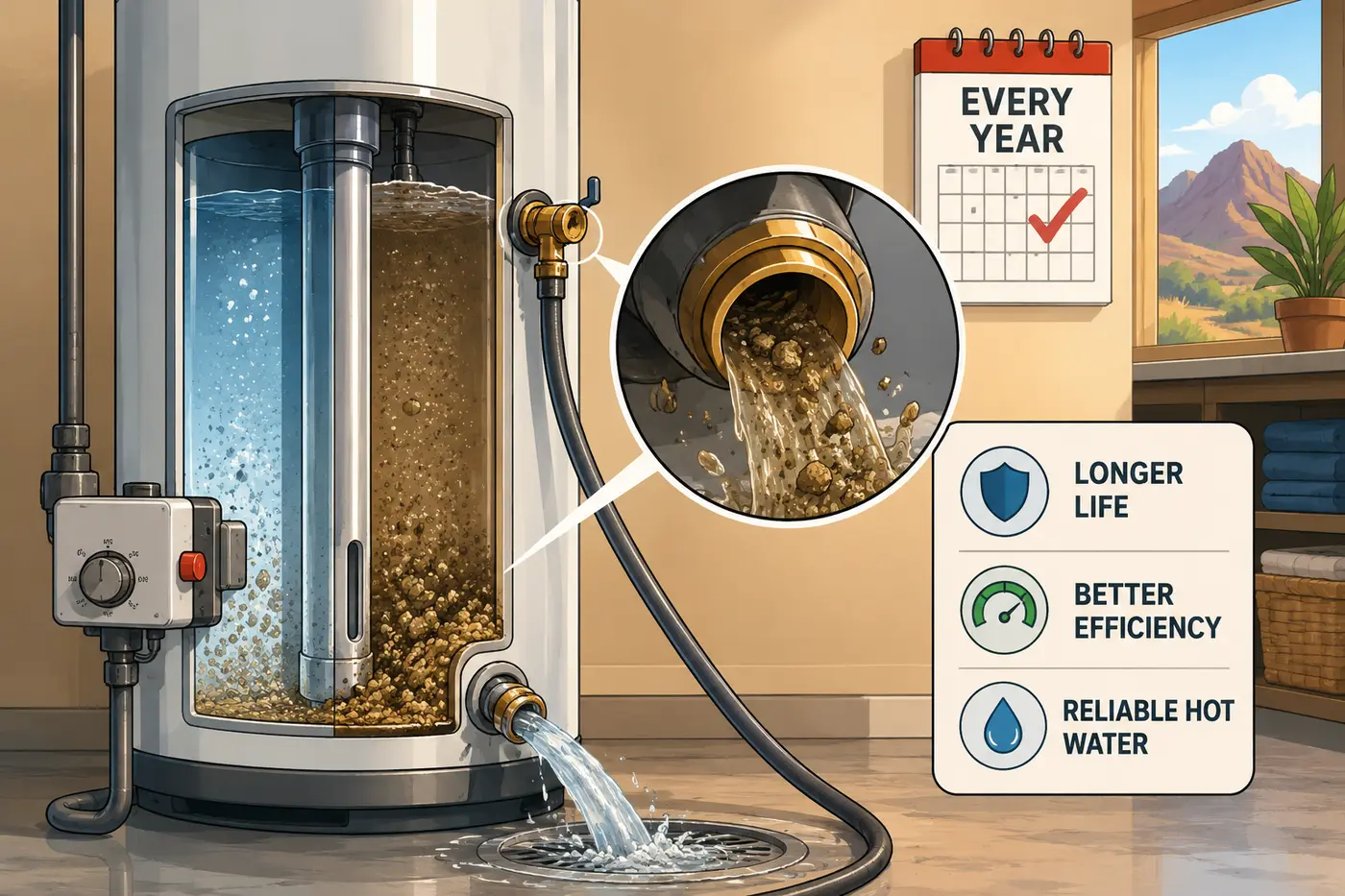
Heat pushes dissolved minerals out of solution, and they settle exactly where the heat is: the bottom of the tank, directly on top of a gas burner or caked onto electric elements. Layer by layer, a Valley tank builds itself a blanket of rock. From that point on, the burner heats the rock, the rock eventually heats the water, and you pay for both steps. That is the whole problem in one sentence — the heater burns money warming stone before it warms anything you can use.How the bill shows up
Three ways. Recovery slows, so the third shower of the morning goes cold. Capacity shrinks, because a 50-gallon tank carrying several inches of sediment is a 40-gallon tank you bought at 50-gallon money. And the tank bottom runs hotter than it was designed to, because the heat cannot get through the sediment into the water fast enough — which is how a tank built for a 10 or 12 year life dies at seven. The soundtrack is unmistakable: popping and rumbling as steam bubbles fight their way up through the sediment. If your water heater has started talking, that is what it is saying.What a flush actually involves
We shut off the heat source, connect a hose to the drain valve, and run the tank out until the water goes from cloudy-with-grit to clear, stirring the sediment loose with short blasts of cold inlet water along the way. Cracking the valve open for thirty seconds does not count. While the tank drains we test the temperature and pressure relief valve — the safety device that keeps a failing water heater from becoming a genuinely dramatic event — and look at the anode rod if the tank's age calls for it.What the fixture walkthrough catches
The flush comes with a lap around the house, and that lap earns its keep. Bulging washing machine supply lines. Angle stops under sinks that have seized open and will not close on the day you desperately need them to. A relief valve discharge pipe that drains nowhere. Slow drips that have been quietly staining a cabinet floor for months. None of it is glamorous. All of it is cheaper found now than found by your drywall.One truck, both chores
A water heater flush pairs naturally with cooling season prep, so we bundle them: $149 covers an AC tune-up and a water heater flush in the same visit. Our White membership includes the flush every year alongside the rest of the maintenance schedule, which is the easiest way to make annual actually mean annual.The honest exception
If your tank is past ten years old and has never been flushed, pause. Enough sediment can be plugging the very weaknesses it created, and a first flush sometimes wakes up a leak the rock was holding shut. Old plastic drain valves also have a habit of refusing to reseal. We will tell you on sight whether your tank is worth flushing or worth budgeting to replace — and if it is the second one, we would rather you put the flush money toward the new tank. A straight quote costs nothing.A flush takes under an hour, and in this water, once a year is not a suggestion — it is roughly how long it takes Phoenix water to undo the last one. Call (480) 863-5855 or grab the $149 tune-up and flush combo and knock out both machines in one appointment.
Need this handled, not just explained?
Same-day service across the Valley, upfront flat-rate pricing, and NATE-certified technicians available 24/7.