Repair or replace? The honest math
Every contractor has an opinion, and most of them profit from one answer. Here is the arithmetic we actually use — including when we tell people to keep the old unit.
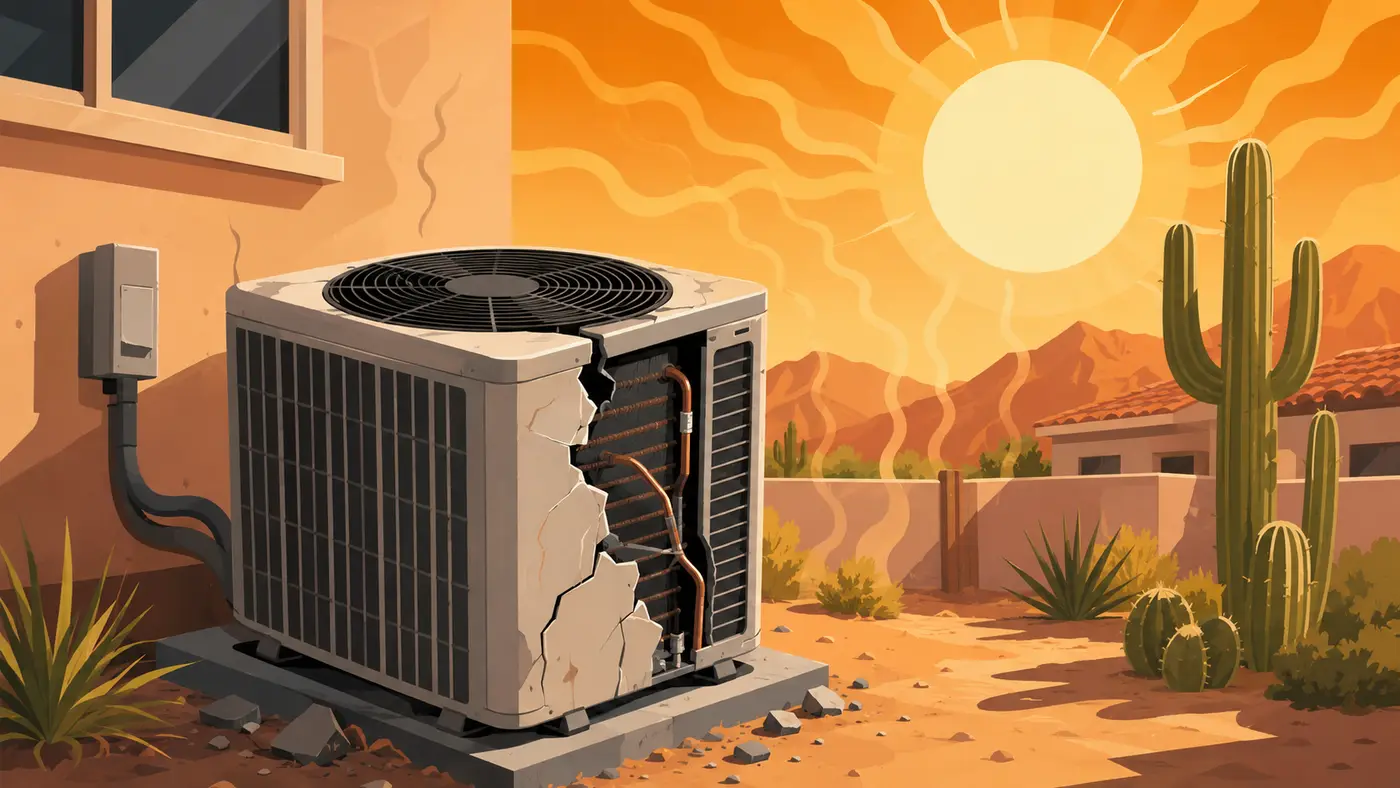
It is the question every homeowner asks eventually, usually while standing in a hot hallway watching a technician write on a clipboard. Do I fix this thing again, or do I finally replace it? And it is the question where the incentives are most crooked, because the person answering usually makes far more money on one option than the other.
So let us take the sales pressure out of it and just do the math.
The rule most of the trade uses
A common rule of thumb multiplies the age of the system by the cost of the proposed repair. If the result exceeds the price of a new system, replace. It is a decent starting point, but it is blunt, and in Phoenix it misses two things that matter enormously: how hard our climate works the equipment, and what the system is costing you every single month it keeps running.The four numbers that actually decide it
Age. In a temperate climate an air conditioner might see twenty years. In the Valley, ten to fifteen is realistic, because our systems run a duty cycle almost nothing else in the country matches. A twelve-year-old unit here is not middle-aged. It is elderly.The repair cost against the replacement cost. A $300 capacitor or contactor on a ten-year-old system is easy — fix it. A $2,400 evaporator coil on that same system deserves a hard look, because you are putting a quarter of a new system's cost into equipment that owes you nothing.
Refrigerant type. If your system runs the old R-22, the calculus shifts. That refrigerant has been phased out, supplies are scarce, and prices reflect it. A significant leak repair on an R-22 system often costs more than the system is worth.
What it costs you monthly. This is the number almost nobody puts on the table, and it is frequently the deciding one. An aging, low-efficiency unit fighting a Phoenix summer can add meaningful money to every bill from May through September. Spread across a decade, that difference buys a lot of equipment.
When we tell people to keep the old unit
Plenty of times. If your system is eight years old, the repair is modest, the refrigerant is current, and the unit has been maintained, replacing it is a waste of your money — and we will say so plainly, even standing in your driveway with a brochure in the truck. We would rather have your repair today and your replacement in five years than push you into something you did not need and lose your trust permanently.When replacement is genuinely the smart money
When the system is past twelve years, when the repair runs into four figures, when it is the third call in two summers, or when a failed compressor or coil meets an aging unit. At that point every dollar spent on repair is rent, not ownership.Make the decision in daylight
The worst time to decide is 10 p.m. in a 90-degree house, which is exactly when most people are asked to. If your system is showing its age, get the assessment now, while you have leverage and time to think. Our estimates are free, our instant estimate tool gives you a realistic range in about thirty seconds, and 0% financing means a failing system does not have to become a financial emergency.Ask us for both numbers — the repair and the replacement — in writing. Any contractor who will not give you both is telling you something about themselves.
Need this handled, not just explained?
Same-day service across the Valley, upfront flat-rate pricing, and NATE-certified technicians available 24/7.