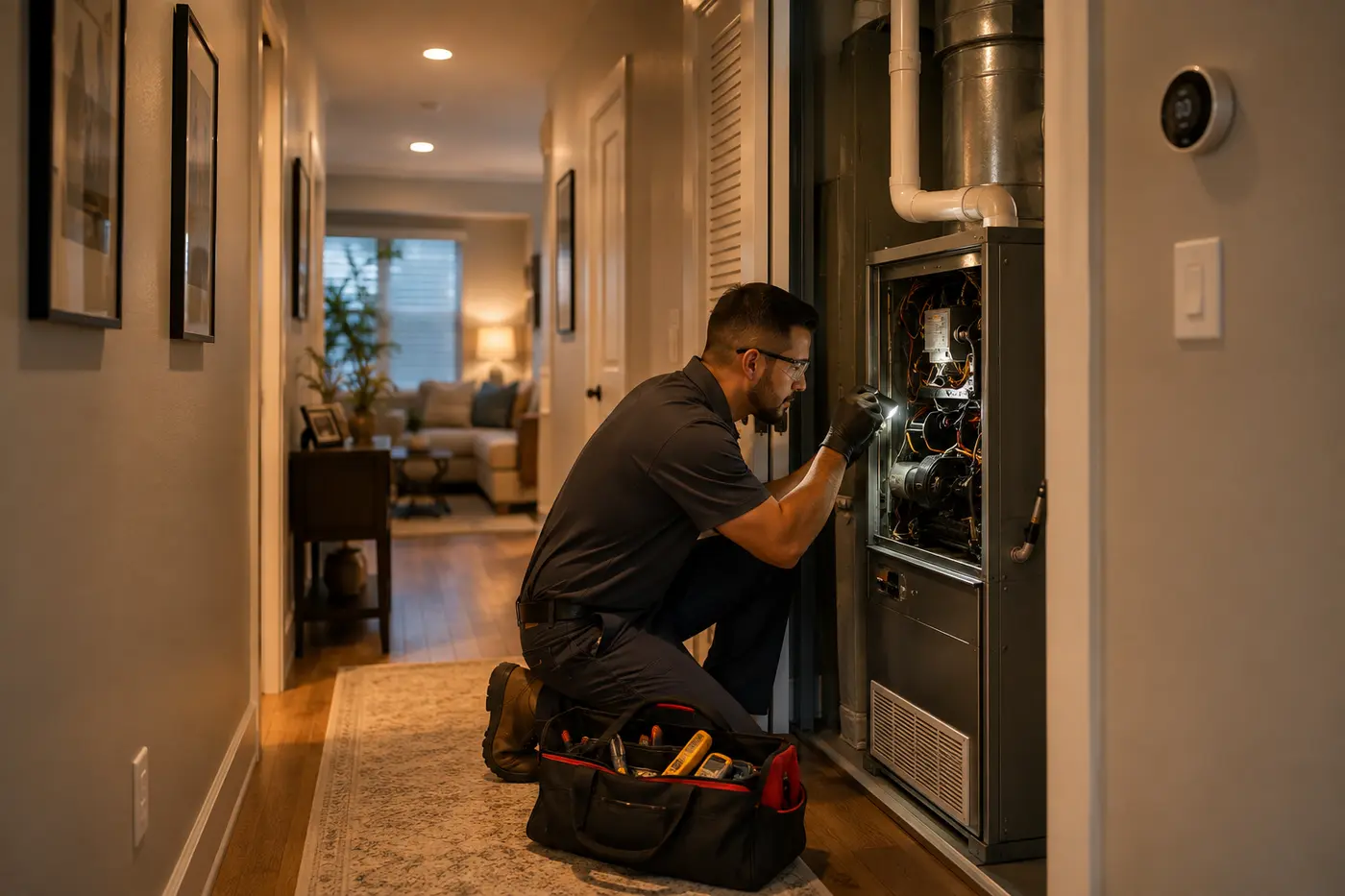
Does closing vents in unused rooms save money?
It feels like free money — push the cool air where you live and starve the rooms you don't. The physics have other plans, and your blower pays the price.
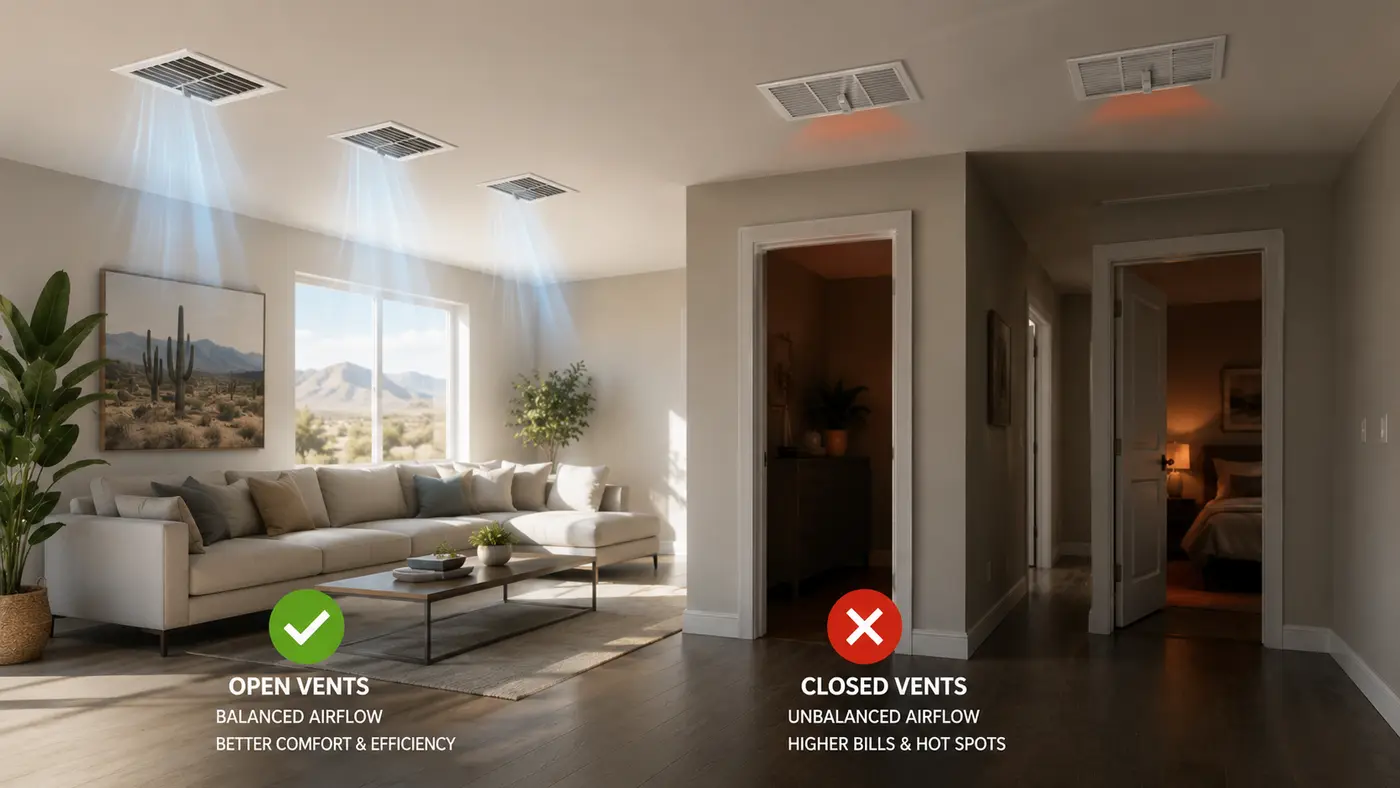
It's one of the most durable pieces of homeowner folklore going: close the vents in the rooms you don't use, and the air — and the savings — flow to the rooms where you actually live. The logic feels airtight. We find closed registers in guest rooms and formal dining rooms all over the Valley. And it's wrong. In a typical Phoenix home, closing vents doesn't save money. It usually costs you, and every so often it costs you a big repair.
Your blower can't take the hint
The fan in your air handler was engineered to push a specific volume of air through a duct system with a specific resistance. Close a register and you haven't asked the system to do less work — you've blocked an exit while the fan keeps shoving. Static pressure inside the ducts climbs. Depending on the blower type, the motor either strains against the restriction or ramps up to force the same airflow through fewer openings, burning more electricity to do it. Nothing about that is savings.The air finds another way out
Ductwork isn't a sealed pipe. It's sheet metal and flex duct joined with fittings and tape, and most of it runs through your attic — a space that hits 130-plus degrees every summer afternoon. Raise the pressure inside those ducts and every seam leaks harder. The cold air you paid to make gets squeezed out into the attic before it ever reaches a room. You closed a vent to stop "wasting" air on the guest room and ended up air conditioning your insulation.Then there's the coil
Your evaporator coil needs a steady river of warm air moving across it to do its job. Choke that airflow and the coil runs colder and colder until the moisture on it turns to ice. A frozen coil stops cooling entirely, and running the system in that state can send liquid refrigerant back to the compressor — the one part you never want to buy. More than one "AC just quit" call we've run started with a diagnosis of a house full of closed registers.The savings you imagined vs. the physics you got
The mental math says close off a quarter of the house, save a quarter on cooling. The physics disagree. Closed rooms don't stop absorbing heat — it pours in through their walls, windows, and ceiling all afternoon, then bleeds into the rest of the house through interior walls and the gap under the door. Meanwhile your system fights higher pressure, leaks more into the attic, and flirts with icing up. Researchers who have actually measured this found that closing vents tends to raise total energy use, not lower it.What actually works
If the goal is a smaller bill, spend the effort where it pays. Sealing the duct system fixes the exact leaks that closed vents make worse — in Phoenix attics, that's routinely a double-digit efficiency gain. A modest thermostat setback while you're out costs nothing and saves real money, no hardware required. Both beat a closed grille by a mile.For rooms nobody ever uses
If part of your home is genuinely unoccupied — a casita, a bonus room, a wing the kids left behind — the answer is equipment built to condition spaces independently, not a blocked register. A ductless mini-split gives that space its own small system you can dial down for real, without back-pressuring the ducts that serve the rest of the house. Zoning your main system is another honest option worth pricing.So open the registers back up, all of them, and let the system breathe the way it was designed to. If yours has spent years fighting closed vents, it's worth a once-over — book a $129 tune-up or call (480) 863-5855 and we'll check the airflow, the coil, and the ducts while we're at it.
Need this handled, not just explained?
Same-day service across the Valley, upfront flat-rate pricing, and NATE-certified technicians available 24/7.