The thermostat argument
One camp says pick a temperature and never touch it. The other says turn it up when you leave. In a Phoenix summer, both are half right — and the utility rate plan decides which half.
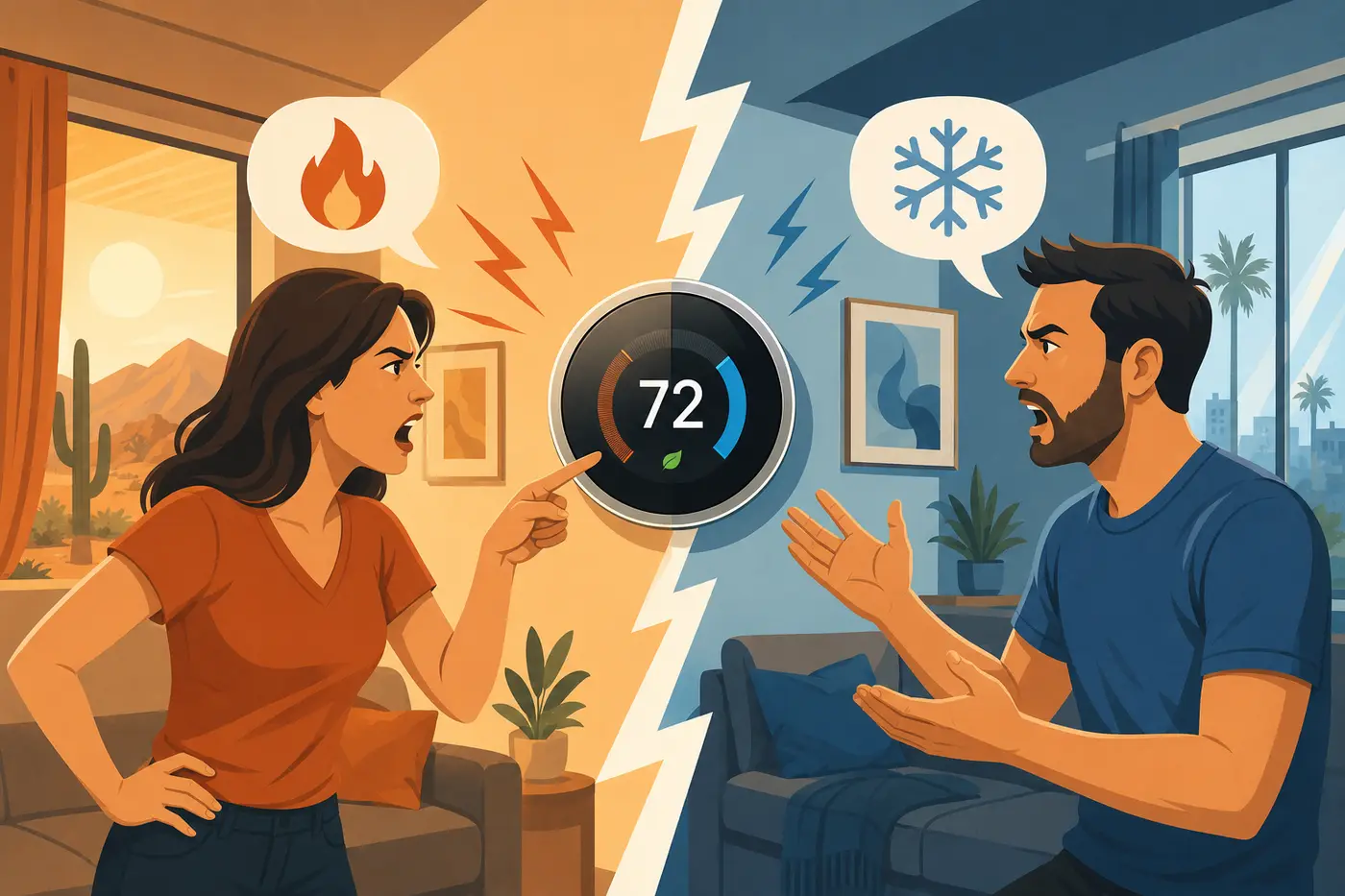
Every household has this argument. One person sets the thermostat up before leaving for work to save money. The other insists that making the system cool the house back down costs more than just leaving it, and that constant temperature is cheaper. Both are repeating something they were told, and in a Phoenix summer the honest answer depends on a variable neither of them mentioned: what your electricity costs at different hours.
The physics part, briefly
A house loses cool air to the outside at a rate proportional to the temperature difference between inside and out. A house held at 74 all day while it is 110 outside leaks heat inward faster than a house allowed to drift to 80. Less difference, less leakage, less total work. So on a flat rate, letting the temperature rise while nobody is home does save energy — the "it costs more to cool it back down" claim is not correct on its own terms.The catch is comfort and recovery time. In extreme heat a system pulling a house from 85 back to 76 can run a very long time, and if it is undersized or the ductwork is poor it may struggle to catch up at all. Which is why the setback should be modest — a few degrees, not ten.
The part that actually decides it: time-of-use
Here is where Phoenix differs from most of the country. If you are on a time-of-use rate plan, electricity during on-peak afternoon and early-evening hours can cost several times what it costs overnight. Suddenly the question is not just how much energy you use but when.That flips the strategy. Instead of setting back during the day and recovering at 5pm — which lands your heaviest runtime squarely in the most expensive window — you pre-cool: run the house cooler during cheap morning hours, then let it drift up during peak. The building's mass carries you through. Same comfort, meaningfully different bill.
If you do not know which plan you are on, that is the highest-value thing to go find out. It is on your statement or in your utility's online portal, and it changes the correct answer entirely.
What we actually suggest
Pick the warmest temperature you are genuinely comfortable at and hold it as your baseline — every degree lower costs real money in this climate. Use a modest setback of a few degrees when the house is empty, not a dramatic one. If you are on time-of-use, pre-cool before your peak window and let it drift during it. And use a programmable or smart thermostat so none of this depends on anyone remembering.What a thermostat cannot fix
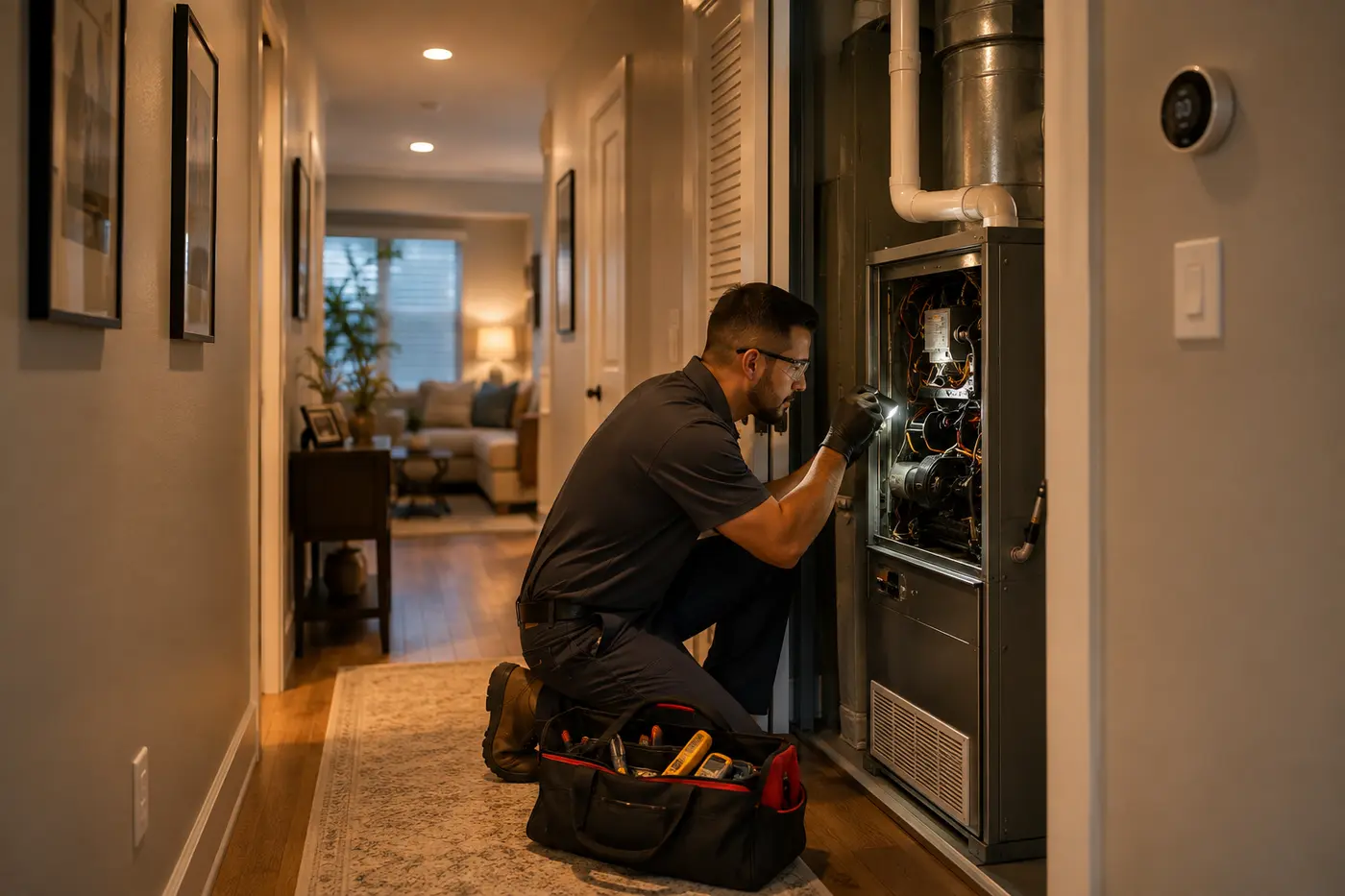
Worth saying plainly: if your system cannot hold temperature on a hot afternoon, no setting will solve that. That is a capacity, charge, airflow or duct problem, and the thermostat is just the messenger. Same if some rooms never match the setting — see the one room that never cools.Fans are the other cheap win people underuse. Ceiling fans cool people, not rooms, which means they let you sit comfortably a degree or two warmer — but running them in empty rooms is pure waste.
If your system is running constantly to hold a reasonable setting, that is worth a look rather than a thermostat adjustment. Call (480) 863-5855 or book a tune-up and we will measure whether it is performing to spec.
Need this handled, not just explained?
Same-day service across the Valley, upfront flat-rate pricing, and NATE-certified technicians available 24/7.