The bill that arrives in August
Your usage did not double. Your rate plan, your peak hours, and a system working harder than it should did. Here is how to tell which one is costing you.

Every Phoenix homeowner has opened one. The August statement lands, the number is nearly double June, and nothing about how you live changed. You did not add a room. You did not host anyone. The instinct is to blame the air conditioner, and sometimes that is right — but usually the bill is telling a more complicated story, and it is worth reading properly before you spend money.
There are really three separate things that drive a summer bill in the Valley, and they are worth separating because the fix for each is completely different.
1. Your rate plan and when you use power
This is the one most people underestimate. Both major Valley utilities offer time-of-use plans where electricity costs dramatically more during on-peak afternoon and early-evening hours than it does overnight. On those plans, running the air conditioner hard between roughly late afternoon and mid-evening can cost several times what the same cooling costs at six in the morning.That changes the strategy entirely. Pre-cooling — running the house cooler in the morning and letting it drift up slightly during peak — can meaningfully cut a bill without making anyone uncomfortable, because the building's mass holds the cool. A programmable or smart thermostat makes this automatic. Check which plan you are actually on and what your peak window is; a surprising number of people are on a plan that no longer matches how their household lives.
2. How hard the system is working to do the same job
A system that is losing efficiency does not announce it. It just runs longer to reach the same temperature, and longer runtime is exactly what a bill measures. The usual culprits are the boring ones: a coil packed with dust so it cannot shed heat, a refrigerant charge that has drifted off spec because of a slow leak, a filter nobody has changed, or ductwork leaking cooled air into the attic. Duct leakage alone commonly runs twenty to thirty percent in an average home — you are paying to cool a space nobody lives in.This is the category worth checking first, because it is the cheapest to fix and it compounds. A tune-up that restores correct airflow and charge pays for itself over a Phoenix summer more reliably than almost anything else you can buy.
3. The age and efficiency of the equipment itself
An older, lower-efficiency system simply consumes more electricity to move the same heat. If your unit is past twelve years and your bills climb every summer regardless of maintenance, you are paying an invisible monthly premium to keep an aging machine alive. This is the honest argument for replacement that has nothing to do with a breakdown: for many homeowners the monthly payment on an efficient new system lands close to what the old one was quietly costing in wasted power.How to actually diagnose it
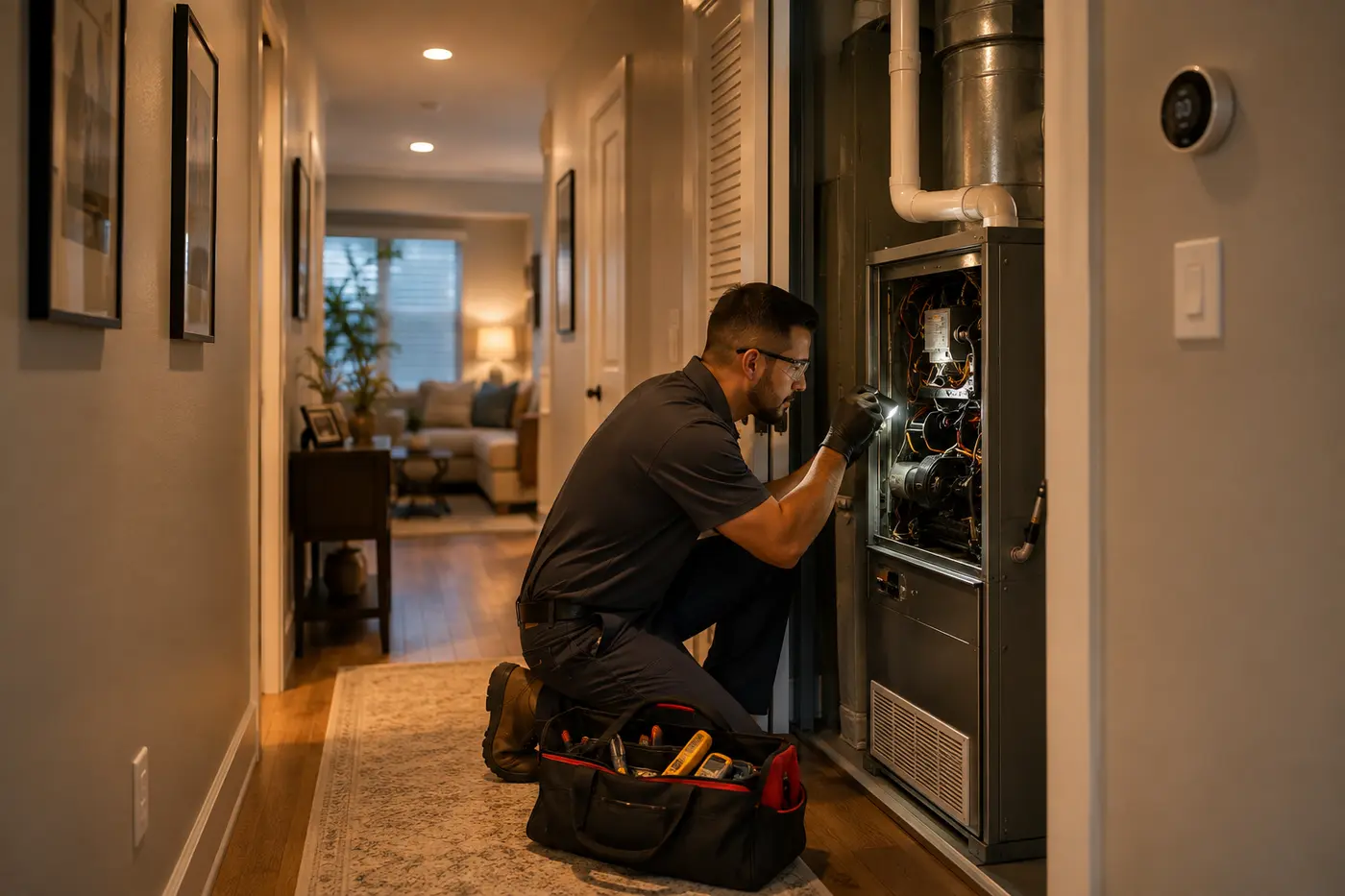
Pull twelve months of usage from your utility's online portal — most show kilowatt-hours, not just dollars, which is the number that matters. Compare this summer to last summer at the same temperatures. If your dollars rose but your kilowatt-hours are flat, the change is your rate plan, not your equipment. If your kilowatt-hours rose, the system is working harder and something mechanical is worth investigating.That single comparison will tell you whether to call your utility or call us. If it points at the equipment, we will measure airflow, temperature split, and charge and show you the readings rather than describing them — call (480) 863-5855, or see our current specials first.
Need this handled, not just explained?
Same-day service across the Valley, upfront flat-rate pricing, and NATE-certified technicians available 24/7.