What that noise means
Buzzing, screeching, rattling, clicking, a low hum that will not start. Air conditioners fail loudly before they fail completely, and the sound tells you a lot.
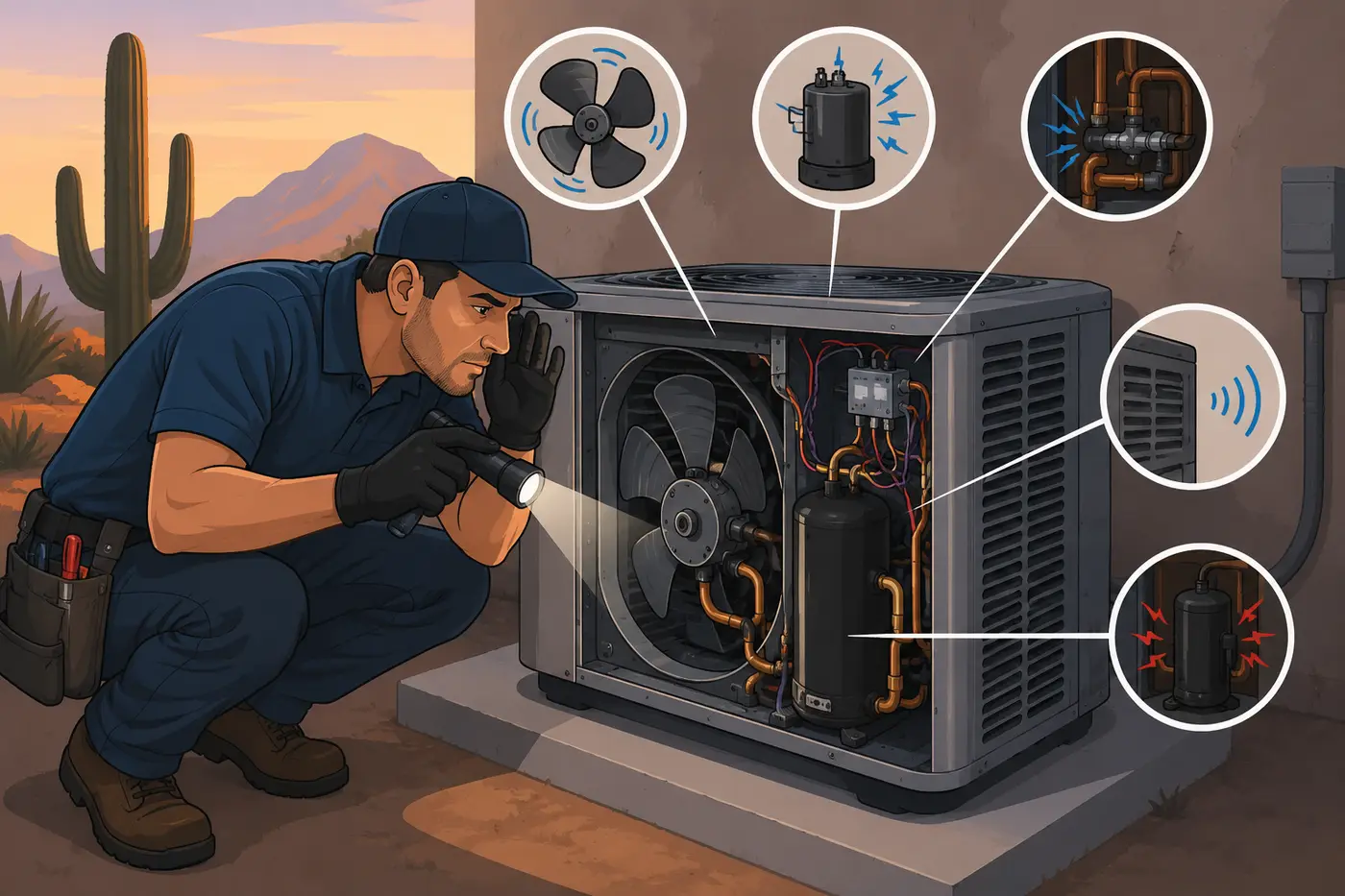
Most air conditioners give you notice. Not a warning light or an alert on your phone — a sound. Something changes in the noise the system makes, the homeowner registers it as slightly wrong, and then either calls or waits. The ones who call usually pay less, because most of these noises are a small part announcing itself before it takes something bigger with it.
Here is a field guide to the ones we actually get called about.
Humming, but it will not start
The system tries, hums, and does nothing. Classic failing capacitor — the component that gives the compressor and fan motor the jolt they need to start turning. It is among the most common failures we replace, it is inexpensive, and it is very often what is wrong when a system quits on the hottest afternoon of the year. Do not attempt this one yourself; capacitors hold a charge even with the power off.Loud buzzing
Usually electrical. A failing contactor, a loose connection arcing, or a relay chattering. It is worth taking seriously rather than living with — arcing burns contacts, and burnt contacts eventually strand you. If the buzzing is accompanied by any burning smell, shut the system off at the breaker and call.Screeching or squealing
Typically a motor bearing going, or a belt in older equipment. A high metallic screech on startup that fades is different from a continuous squeal — the continuous one means a motor is on its way out, and replacing a motor is far cheaper than replacing a motor plus whatever it damaged while seizing.Rattling or clanking
Rattling is often something loose and benign: a panel, a screw, debris in the outdoor unit. Clanking is not benign. A heavy metallic knock from the outdoor unit can be a failing compressor mount or internal damage, and it deserves a look quickly. Turn the system off and check for obvious debris first; if it is clear and the noise is inside the machine, stop running it.Clicking
Occasional clicking at start and stop is normal — that is relays doing their job. Constant, repeated clicking is a system trying and failing to start, which usually points back at a control or capacitor problem.Hissing or bubbling
Hissing can indicate a refrigerant leak; a bubbling or gurgling sound sometimes accompanies one. Given that low refrigerant also causes frozen coils and eventually compressor damage, this is not one to monitor for a few months.The rule of thumb
New noises are information. A sound that appears and stays is a component changing state, and components rarely improve on their own. The cost difference between replacing a capacitor and replacing a compressor is enormous, and the gap between those two events is frequently a few weeks of a noise somebody decided to live with.Most of these are caught at a seasonal tune-up — we test capacitors under load and check electrical connections specifically because they are the cheap parts that cause expensive failures. If yours is making a noise you have not heard before, describe it when you call (480) 863-5855; it genuinely helps us arrive with the right part on the truck.
Need this handled, not just explained?
Same-day service across the Valley, upfront flat-rate pricing, and NATE-certified technicians available 24/7.