
Winter AC care for Phoenix homes
From December into February the condenser goes quiet and everyone forgets it exists. The desert does not. Here is how to make sure it starts in spring.
- Wiring and rodent inspection for idle units
- Heat pump defrost and heating checks
- No tight covers: the Phoenix-correct approach
- Replacement planning without the July panic
Schedule today — we’re here 24/7.
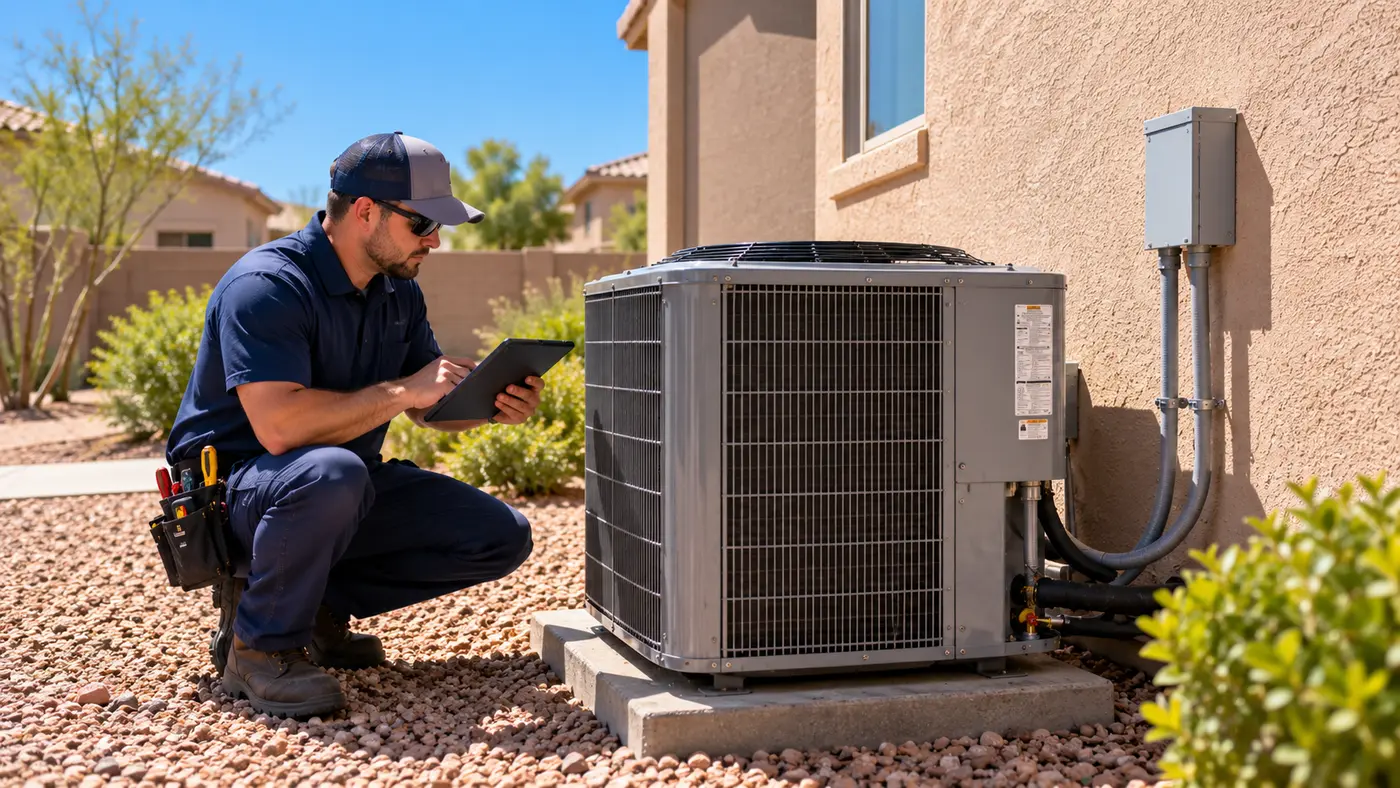
Winter is when you forget the air conditioner. That is the problem.
From December into February, the condenser beside your house goes silent. You stop hearing it, then you stop thinking about it, and by March you could not swear it is still there. The desert has a better memory. An idle outdoor unit is sheltered, quiet and full of wiring, which makes it prime real estate for a neighbor that was chewing on Arizona long before Arizona had anything electric to chew.
The University of Arizona's Cooperative Extension describes woodrats, better known as pack rats, as "notorious for chewing wiring of cars and appliances." They favor desert scrub, which is a polite way of describing a good share of the Phoenix metro. A wire chewed in January hurts no one in January. It waits for the first hot afternoon in April, when you switch to cool and nothing happens.
Do not wrap the unit like a holiday present
Every winter, someone buys a snug vinyl cover for the condenser and feels responsible. In colder climates, covers keep ice and snow off. Phoenix has no such problem, and a cover that seals the unit can hold moisture against the cabinet and give rodents exactly the dark, sheltered spot they were looking for. Leave it uncovered. If falling debris from a tree is the worry, ask us about a breathable, top-only guard.
If your air conditioner is also your heater
Many Valley homes heat with a heat pump, which means the outdoor unit does not rest in winter at all. Never cover a heat pump. On a cold morning it may frost over, pause, and release a cloud of steam. That is the defrost cycle, and it is normal. What is not normal: ice that stays, a unit that runs constantly without warming the house, or a power bill that suggests the backup heat strips are doing all the work. That is when to book heat pump repair.
Winter is the smart season to decide about replacement
If last summer ended with a repair estimate that made you wince, winter is the time to think it over. Nobody makes a good decision about a fifteen-year-old system at nine o'clock on a July night with the house at 92 degrees. In winter you can compare options with a clear head, schedule the installation when indoor comfort is not at stake, and read the fine print instead of signing it. Start with what a new AC costs, then look at AC installation and financing.
Phoenix winters are short, and lately unreliable
Sky Harbor's normal January high is 67.6 degrees. Normal is a generous word lately: February 2026 averaged a high of 80.0 degrees, the warmest February in Phoenix records going back to 1896, according to the National Weather Service. An air conditioner can be called back to work with very little notice. A winter check means it answers.
Already had a fall AC check and see no sign of visitors? You may not need a winter visit at all. We would rather tell you that than sell you one.
The Phoenix season window
Protect idle equipment; plan replacements
What a winter AC visit covers
- Inspects outdoor wiring, controls and insulation for chewing and nesting
- Checks the electrical disconnect and connections for corrosion or looseness
- Clears debris from the cabinet and base pan
- Confirms the condensate drain and pan are clear before spring
- On heat pumps: watches a defrost cycle and verifies heating and backup heat
- Notes worn parts and gives you a written plan before cooling season
- On request: a replacement consultation with a proper load calculation
What you can do without tools
- 1Leave the outdoor unit uncovered, or use only a breathable cover over the top.
- 2Keep firewood, yard waste and stored items away from the unit; they invite rodents.
- 3After a storm, clear loose leaves and debris from around the outside of the cabinet by hand.
- 4Do not reach into the unit or disturb a nest. University of Arizona Extension warns nests can carry hantavirus; call pest control, then call us.
- 5On a genuinely warm winter afternoon, run the cooling for a few minutes so a problem shows up in February instead of May.
More seasonal maintenance
Sources
- University of Arizona Cooperative Extension, Woodrats (Packrats), July 2022
- National Weather Service Phoenix, monthly climate summaries (Sky Harbor, 1991–2020 normals)
Updated October 26, 2026. Final diagnosis and scope are confirmed on site.
Winter AC care: common questions
Straight answers, no runaround. Don’t see yours? Our team is a phone call away, around the clock.
No tight covers. Phoenix does not get the snow and ice that covers are designed for, and a sealed cover can trap moisture and shelter rodents. If debris from a tree is a concern, a breathable top-only guard is the most we recommend. Never cover a heat pump; it runs all winter.
Yes. University of Arizona Cooperative Extension notes they are notorious for chewing the wiring of cars and appliances. Signs include chewed insulation, nest material of sticks and debris, and droppings near the unit. Do not disturb a nest yourself.
Light frost followed by a short pause and a puff of steam is the defrost cycle, and it is normal. Ice that does not clear, constant running without warming the house, or a sudden jump in your bill are reasons to book heat pump repair.
It is a good time to decide. You can compare options without the pressure of a broken system in July, and installation can be scheduled when you are not relying on cooling. See AC installation and financing.
Not necessarily. If your system was checked in the fall and there is no sign of rodents, a winter visit may be unnecessary. Heat pumps are the exception, since they work through the winter.
Keep exploring
Every fall and winter page, homes and businesses.
Year-round furnace and heat pump service.
The full tune-up, any time of year.
Scheduled visits you never have to remember.
Savings on service and new systems.
Winter AC care throughout the Phoenix area
Same-day appointments across Maricopa and Pinal counties. Pick your city for local pricing pages, reviews and service details.
Find the chewed wire in January, not April
A winter check makes sure the first hot day of spring starts the way it should.
- 24/7 emergency service
- Upfront, honest pricing
- Licensed, bonded & insured