What a $129 tune-up actually buys you
Maintenance is the least glamorous thing we sell and the easiest to fake. Here is exactly what should happen when a technician is in your driveway.
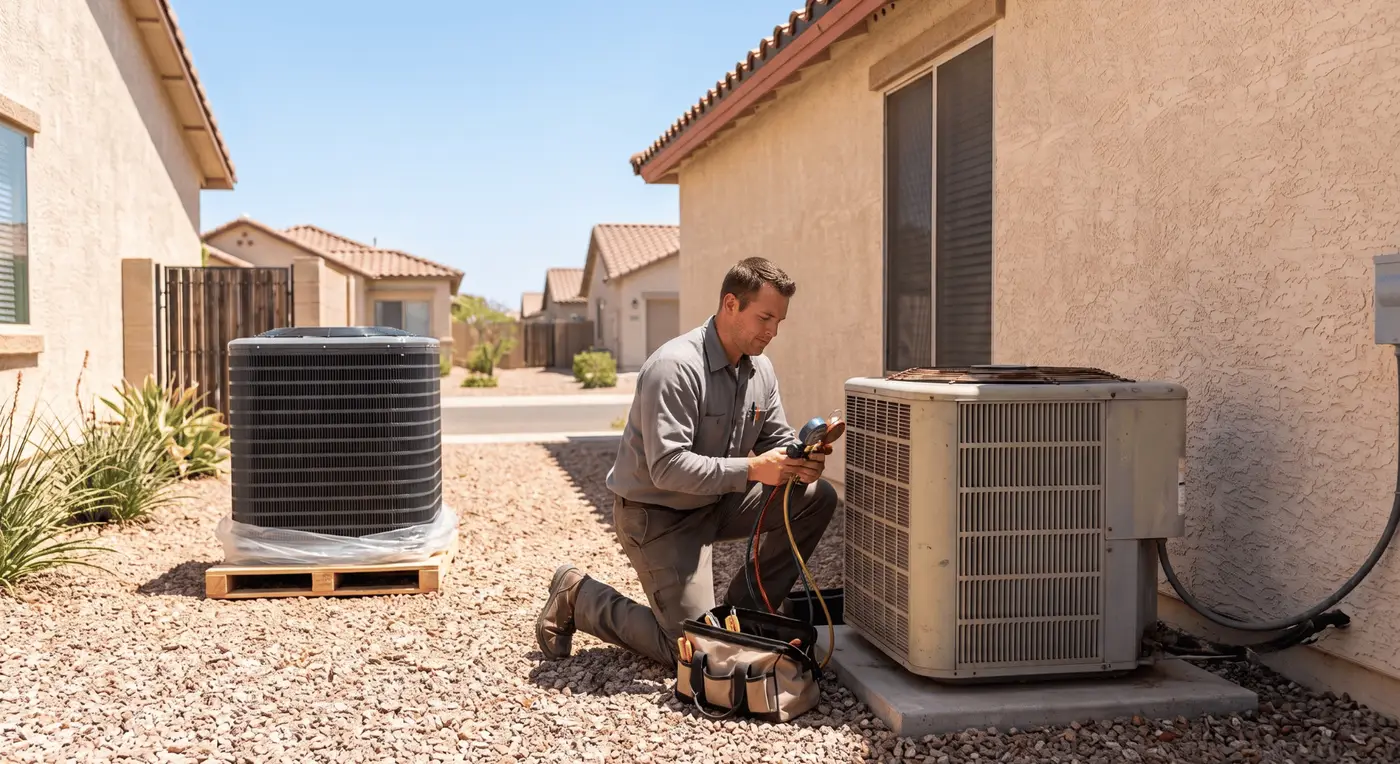
There is a version of the HVAC tune-up that takes eleven minutes. The technician hoses off the outdoor unit, glances at a gauge, sticks a dated sticker on the side panel, and leaves. The homeowner feels responsible. Nothing has actually been prevented.
Because maintenance is invisible work, it is easy to fake — and that is precisely why you should know what a real one looks like. Here is what should happen while someone is standing in your driveway with your money.
The condenser coil gets cleaned. Actually cleaned.
Not rinsed. Cleaned, with the right chemistry, working from the inside out so the debris comes out the way it went in. This is the single highest-value item on the list, because a coil packed with Valley dust cannot shed heat, and a system that cannot shed heat runs longer, hotter, and closer to a compressor failure. On our tune-ups the coil cleaning is included, not an upsell discovered halfway through.The capacitor gets tested under load
A capacitor does not usually announce that it is dying — it just measures weak, then fails on the hottest day of the year. Testing takes two minutes with a meter. Replacing a weak one in April is routine maintenance; replacing it in July is an emergency call at an emergency hour.Refrigerant charge is verified against spec
Not eyeballed. Measured, with the manufacturer's target in mind, accounting for the day's conditions. A system running low is a system with a leak, and the correct response is to find it — not to quietly add refrigerant every year and call it maintenance.Electrical connections get tightened and inspected
Heat cycling loosens terminals over time. Loose connections arc, arcing burns contacts, and burnt contacts strand you. It is unglamorous, thirty-second work that prevents a genuinely expensive failure.The drain line gets cleared
Algae blocks the condensate line, the float switch trips, and your system shuts itself off — or the pan overflows into your ceiling. Clearing it takes minutes. Discovering it takes a stain on your drywall.Temperature split and airflow get measured
The difference between the air going in and the air coming out tells us whether the system is actually performing. Combined with static pressure, it is how we catch duct problems and failing blower motors before they become no-cool calls.Why any of this is worth $129
Two reasons, and neither is sentimental. First, efficiency: a clean coil and a correct charge can quietly take a meaningful bite out of a summer power bill, and in a Phoenix summer that adds up fast. Second, avoidance: the four items above are, in our experience, the origin of most July emergencies. Catching them on your schedule in spring is dramatically cheaper than catching them on the system's schedule in July.There is also a paperwork reason. Most manufacturer warranties require documented annual maintenance. Skip it for years and then need a compressor, and you may discover your coverage went away quietly.
Book the $129 tune-up before the heat sets in, or read more about what is included on our maintenance page. And if a technician ever tells you your system is fine without opening a panel, get a second opinion.
Need this handled, not just explained?
Same-day service across the Valley, upfront flat-rate pricing, and NATE-certified technicians available 24/7.