The air you cannot see
You can buy the finest air conditioner made and still lose a third of it inside your own walls. Ductwork is the part nobody looks at.
Here is an uncomfortable thought experiment. You spend real money on a high-efficiency system. It is sized correctly, installed correctly, and it performs exactly as advertised at the equipment. Then a meaningful share of the cooled air it produces escapes through gaps, bad joints, and disconnected runs — into your attic, where nobody lives.
In a typical home, duct leakage runs somewhere in the range of twenty to thirty percent. That is not a rounding error. That is a fifth to a third of what you are paying for, delivered to insulation.
Why it stays invisible
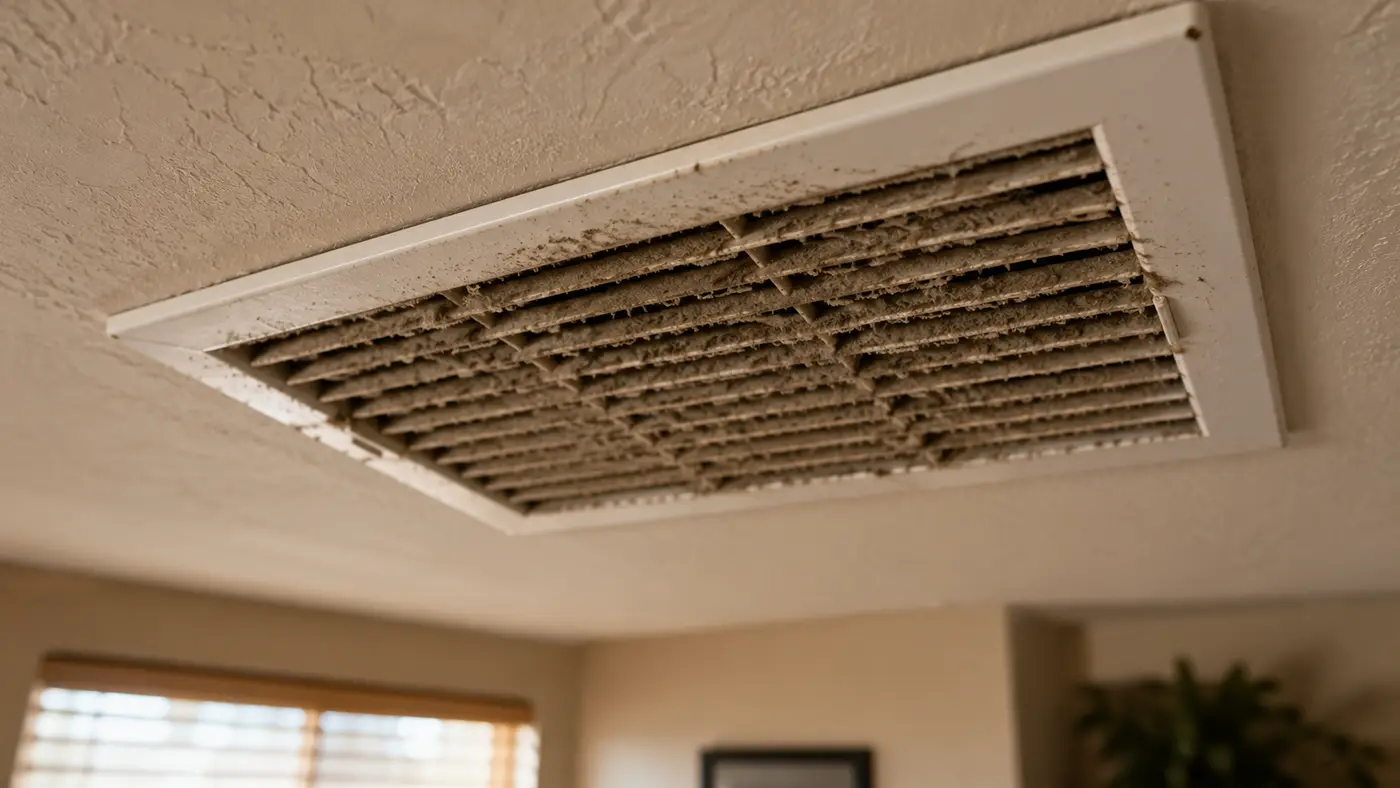
Ductwork lives in attics and crawlspaces. Nobody inspects it, nothing about it looks broken, and its failures show up as symptoms people attribute to other causes: a room that never cools, a system that runs constantly, a power bill that crept up over three summers, dust that returns two days after cleaning.In Arizona there is a compounding problem. Attic temperatures here can climb far above the outdoor air. Air traveling through leaky, poorly insulated ducts in that environment picks up heat on the way to your registers — so even the air that does arrive shows up warmer than it left.
Sealing versus cleaning — they solve different problems
These get conflated constantly, so let us separate them. Sealing is an efficiency and comfort fix: we find the leaks and close them so the air you paid to cool arrives where you wanted it. That is the one that shows up on your utility bill and finally settles the argument about the back bedroom.Cleaning is an air-quality fix. Years of construction dust, drywall grit, and allergens collect in the duct system and ride the airstream into your living space every time the blower kicks on. If someone in your home fights allergies or asthma, or if you have recently remodeled, cleaning is the one that matters. Both are worth doing, but know which problem you are actually solving.
How to tell if you have a problem
Some rooms never reach the thermostat setting. Registers in distant rooms feel weak. Your system runs nearly continuously in summer. Bills climbed without a rate change. Dust reappears immediately after cleaning. Any two of those together and your ducts deserve a look.There is a quick check anyone can do. On a hot afternoon with the system running, hold your hand at the register in the room nearest the air handler, then at the register in the furthest room. A modest difference is normal. A dramatic one — strong cold air in one, a weak lukewarm trickle in the other — points at leakage, a crushed run, or a duct that was never sized for the distance. That is a distribution problem, and no amount of adjusting the thermostat will fix it.
Do this before you buy new equipment
This is the part homeowners most often get backwards. If you are considering a new system, have the duct system evaluated first. Installing premium equipment onto a leaking distribution system is like buying a faster car for a road full of potholes — you paid for performance you will never experience. Correcting ducts occasionally reveals that the system you already own was never the problem.We inspect ductwork as part of our service visits, and we will show you what we find rather than describing it. See duct cleaning and sealing for what the work involves, or call (480) 863-5855 and we will take a look on the next visit.
Need this handled, not just explained?
Same-day service across the Valley, upfront flat-rate pricing, and NATE-certified technicians available 24/7.