What the monsoon does to your air conditioner
Dust that packs a coil solid, power that surges and drops, water where it should not be. Monsoon season is hard on outdoor equipment in ways that show up weeks later.
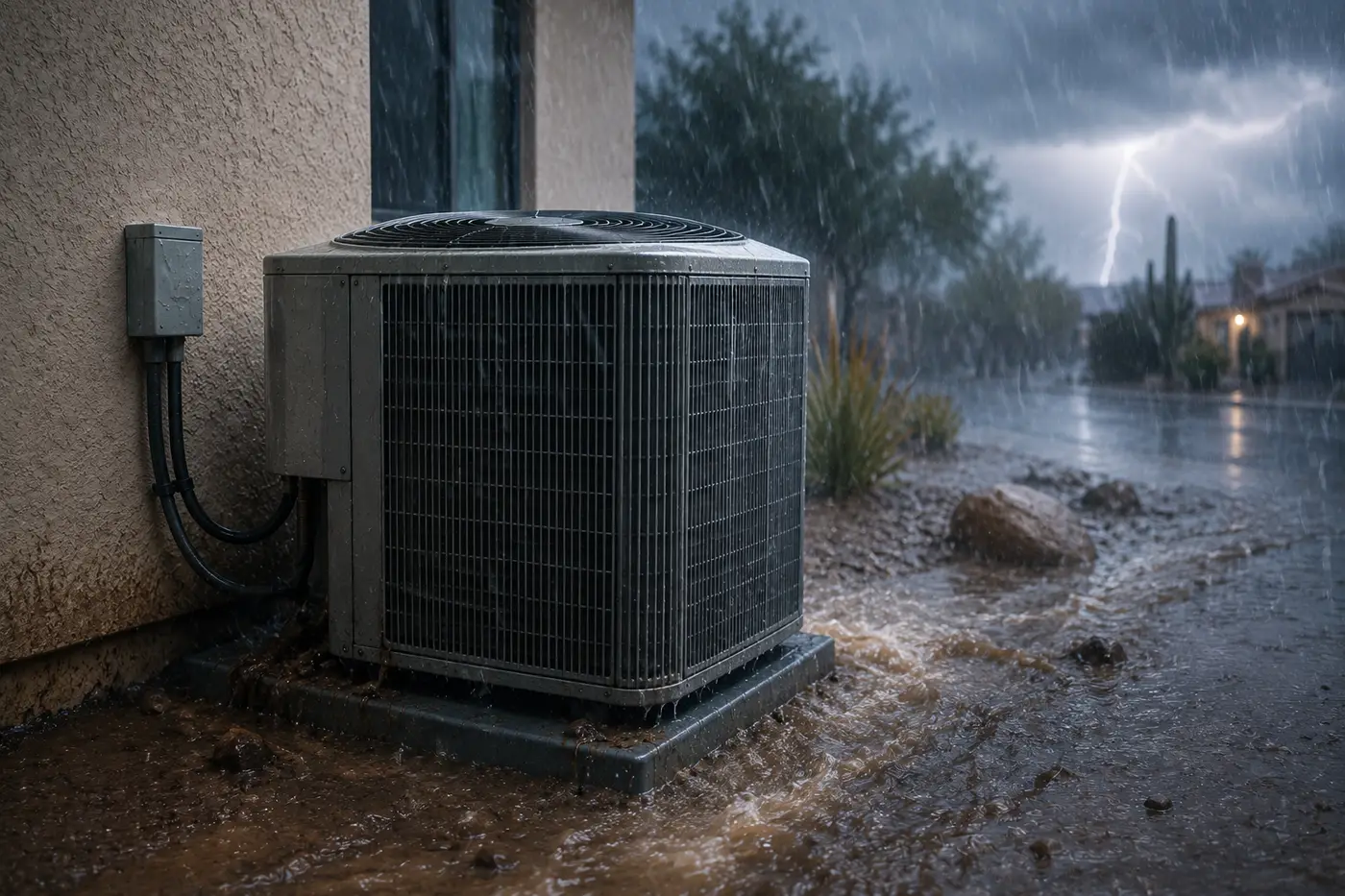
The wall of dust arrives first, then the wind, then rain that falls hard and briefly and runs off ground too dry to absorb it. Monsoon storms are the most dramatic weather the Valley gets, and your air conditioner spends every one of them sitting outside in it, running.
The damage is rarely immediate, which is what makes it easy to miss. A system usually survives the storm and then quietly underperforms for weeks afterward, and the homeowner connects the rising bill or the eventual breakdown to nothing in particular.
Dust is the main event
A haboob drives fine dust into the condenser coil fins at speed — deeper than ordinary seasonal dust settles. That coil is how your home's heat gets dumped into the outside air, and when it is packed, the system loses its ability to reject heat. Head pressure rises, runtime lengthens, efficiency drops, and the compressor works harder than it was designed to for as long as the coil stays dirty.This is why we push a post-monsoon coil cleaning specifically. Rinsing from the outside with a garden hose feels productive and often makes it worse by driving debris further into the fin pack; a proper cleaning works from the inside out with the right chemistry. It is included in our tune-up.
Power is the underrated one
Monsoon storms bring lightning, outages, and — most damaging — the brownouts and surges around them. Air conditioners are full of electronics and motors that dislike both. Repeated surge events degrade capacitors and control boards, and a hard restart into a system that has not equalized pressure is hard on a compressor.Two practical measures: consider whole-home or dedicated HVAC surge protection, which is inexpensive relative to a control board or compressor, and after an outage give the system a few minutes before demanding cooling again rather than cycling the thermostat repeatedly.
Water and debris
Blowing rain moves palm fronds, bougainvillea, gravel and litter against equipment. Check that the unit still has clear space around it — manufacturers specify clearance for airflow, and a condenser pressed against storm debris cannot breathe. Look at the pad: if runoff has washed out material beneath it and the unit is sitting off level, that affects drainage and compressor oil return, and it is worth correcting.Indoors, the humidity that comes with monsoon season puts more load on the condensate system than the dry months do. A drain line that coped fine in May can clog in August, trip the safety switch, and shut the system down — or overflow into a ceiling.
The simple routine
After a significant storm: look at the outdoor unit, clear debris away from it, check that the fan spins freely, and notice whether the air at the vents feels as cold as it did last week. Then have the coil cleaned before the back half of summer, not after it.The whole point is that monsoon damage is cheap to address and expensive to ignore. If a storm has just come through and something feels off, call (480) 863-5855 — and see our current specials before you book.
Need this handled, not just explained?
Same-day service across the Valley, upfront flat-rate pricing, and NATE-certified technicians available 24/7.