
Best AC for a Detached Garage
A detached garage is its own little building with its own little problems. The right cooling depends on the electrical run, the envelope and how you use the space, not on which box has the best reviews.
- Standalone building, standalone system
- Power feed decides the options
- Mini-split wins for daily use
- Insulate before you buy anything
Schedule today — we’re here 24/7.
The Direct Answer
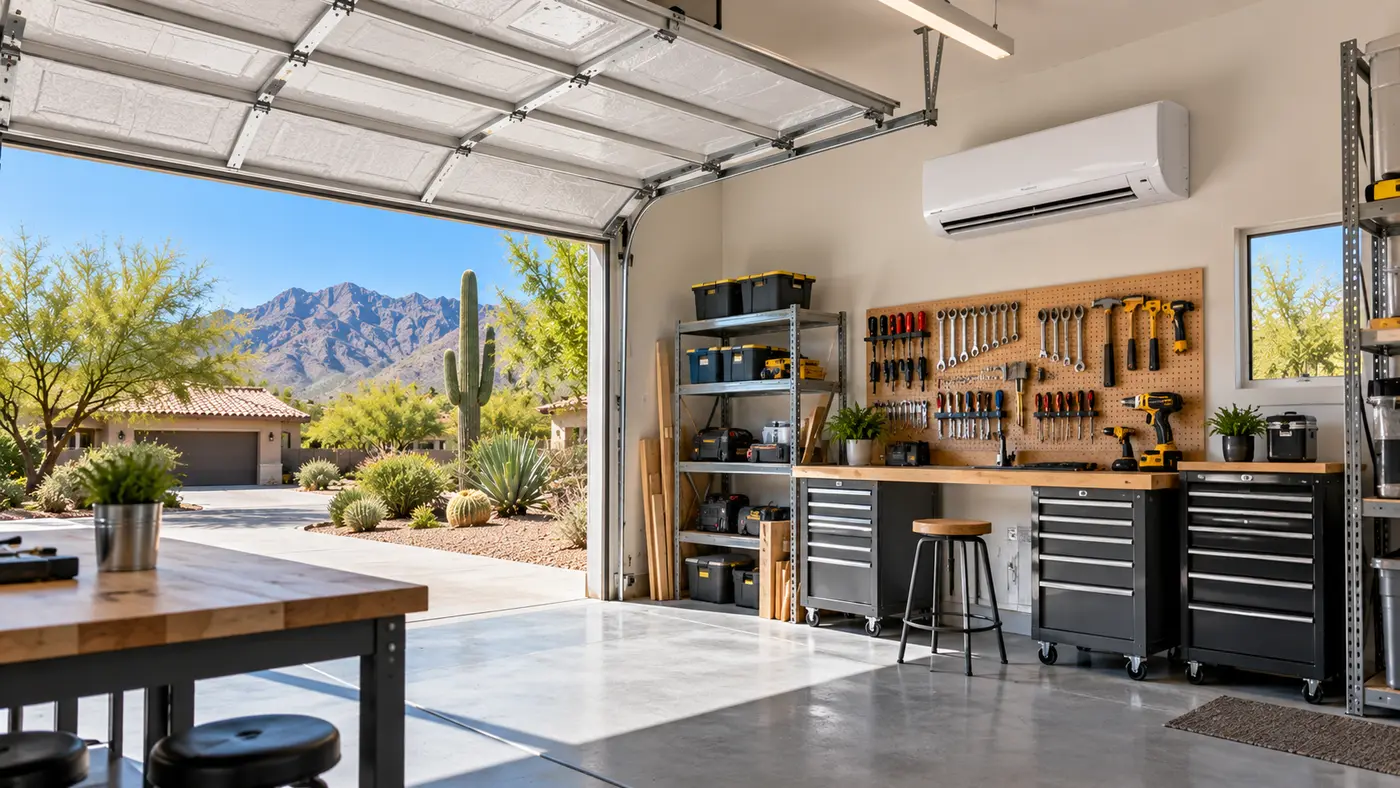
For a detached garage that gets used regularly, a ductless mini-split heat pump is the best cooling option in the Phoenix climate: efficient at 112 degrees, quiet, capable of heating on winter mornings, and installable on a building with no ductwork. For a garage used a few hours a month, a window or through-wall unit is the pragmatic choice. For a large shop or a garage with an apartment above, a small packaged unit or a multi-zone system enters the conversation. Which one is right depends on three things: the electrical feed, the envelope, and the hours. The general background lives in our garage cooling and heating guide; the detached case has wrinkles of its own.Why Detached Is Different
An attached garage borrows a wall or two from a conditioned house. A detached garage borrows nothing. All four walls, the roof and the slab face the desert directly, and the building is usually the last thing anyone insulated. It also sits at the end of whatever circuit reached it, often a single line pulled for a door opener and a few outlets. That feed, more than anything else, decides what you can install. Our detached building HVAC page covers casitas and workshops in the same situation.The Electrical Run
Every option needs power, in different amounts. A window or through-wall unit may run on an existing circuit if that circuit has capacity. A mini-split needs a dedicated circuit at the right voltage with a disconnect at the outdoor unit. A packaged unit needs more still. If the garage has a subpanel with spare capacity, the job is straightforward. If it has one line from the house, the scope includes a licensed electrician running a new feed, and that piece can rival the equipment. This is not homeowner work; it is permitted, inspected electrical work. We coordinate it as part of the install, and we tell you up front when the power is the expensive part.The Options, Compared
Ductless mini-split
Best for daily use. One outdoor unit on a pad against the garage wall, one or more indoor heads inside, refrigerant lines through a single small opening. Inverter operation modulates with the load and handles the dry-season and monsoon conditions well. Heats in winter. Needs a dedicated circuit.Window unit
Best for occasional use with an existing window. Cheapest to buy, simplest to power, loudest to live with, and least efficient in extreme heat. Many detached garages have no window, which settles it.Through-wall or packaged terminal unit
Best for a garage with no window and modest hours. A sleeve through a block wall, a self-contained unit, and a circuit. Works, and heats if you choose a heat-pump version. Louder and less efficient than a mini-split. Our PTAC and through-wall units page explains the category.Small packaged unit
Best for a large shop or a garage with a finished room above. A single outdoor cabinet with short duct runs to more than one space. More capacity, more electrical demand, and a bigger footprint. Rarely right for a two-car garage; sometimes right for a large shop.Evaporative cooler
Best for a shop that can crack the door. Inexpensive to run in dry months, weak in monsoon, adds moisture. A fine complement to good ventilation; not a full-season answer.Insulation First, Every Time
None of the above works well in a bare block box with a steel door facing west. A detached garage often has no ceiling at all, just rafters and roof deck, which means the roof radiates directly into the room. Insulating the roof or adding a ceiling, insulating the door and sealing the perimeter shrink the load enough to change which option is viable and what size it needs. Do the envelope before the equipment.Sizing, Maintenance and the Long View
A detached garage gets sized by a load calculation like any other space, with the difference that every surface is exterior. The number from a square-footage chart will be wrong. Once installed, the unit lives in a dustier environment than anything in the house, and haboob season loads the outdoor coil and the indoor filter fast. A seasonal visit, as described in our maintenance guide, keeps it honest. And if the garage came with an aging window unit or a tired mini-split from a previous owner, our repair-vs-replace guide lays out the math without a sales pitch.Detached Garage Cooling Throughout the Phoenix Area
We install and service detached garage systems in Phoenix, Mesa, Glendale and Peoria. A web page cannot tell you what your feed will support or what your roof is doing to the room. An on-site evaluation can, with a flat-rate quote in writing. Financing on approved credit is available and explained on our financing page.Best AC for a Detached Garage: common questions
Straight answers, no runaround. Don’t see yours? Our team is a phone call away, around the clock.
For regular use, yes: quieter, more efficient at Phoenix temperatures, and it heats in winter. For a garage you enter a few times a month, a window unit's lower cost and simpler power needs can make it the sensible choice.
Possibly a small window or through-wall unit, if that circuit has capacity. A mini-split needs a dedicated circuit, which usually means a licensed electrician running a new feed from the house. We assess this on site and include it in the scope.
No. The distance, the code separation between garage and living space, and the fact that your home's system was not sized for it all rule it out. A detached garage gets its own system.
Then the roof deck radiates directly into the room and the cooling load is severe. Adding insulation at the roof or building an insulated ceiling comes before equipment. It often changes both the size and the type of unit that makes sense.
Usually. The living space above has its own load and comfort needs, and a multi-zone mini-split or a small packaged unit with short ducts may serve both. That is a design conversation, not a chart lookup.
Dust storms load the outdoor coil and the indoor filter far faster than in a house. Check the filter after every major storm, keep the outdoor unit clear of debris, and schedule a seasonal cleaning. Never spray or open the outdoor unit yourself.
During the dry months, with the door cracked, it can be. In monsoon season it loses most of its effect and adds moisture to the room. It pairs well with ventilation for a workshop that pauses in the wettest weeks.
Request an on-site evaluation. We check the electrical feed, the roof and door, and how you use the building, then recommend a system and quote it flat-rate in writing before any work starts. Begin with an estimate request.
Detached Garage AC throughout the Phoenix area
Same-day appointments across Maricopa and Pinal counties. Pick your city for local pricing pages, reviews and service details.
One Building, One Right Answer
A Bleuwave technician evaluates your detached garage's electrical feed, insulation and use, then quotes the best-fit system flat-rate in writing. Call (480) 863-5855 or request an on-site evaluation.
- 24/7 emergency service
- Upfront, honest pricing
- Licensed, bonded & insured